How to Dry Chopsticks After Washing: Holder, Airflow, and Storage Checks
Learn how to dry chopsticks after washing by checking airflow, tip position, towel drying, holder setup, and when a pair should not go back into storage.
Dry chopsticks after washing by wiping off surface water, separating the tips, and leaving the pair in open airflow before storage. Bamboo and wooden chopsticks need extra drying time because trapped moisture can roughen the surface or leave odor.
Drying method and step checks
- Step 1 wipe
- Wipe surface water from the eating tips and upper ends
- Airflow method
- Open holder or towel setup with airflow around both sticks
- Material caution
- Bamboo, wood, lacquered, and travel-case pairs
- Storage mistake
- Closed drawers, sleeves, or cases while the pair is still damp
- Final step
- Tips feel dry, smooth, odor-free, and not cool from retained moisture
Step 1: Wipe the tips before setting the pair down
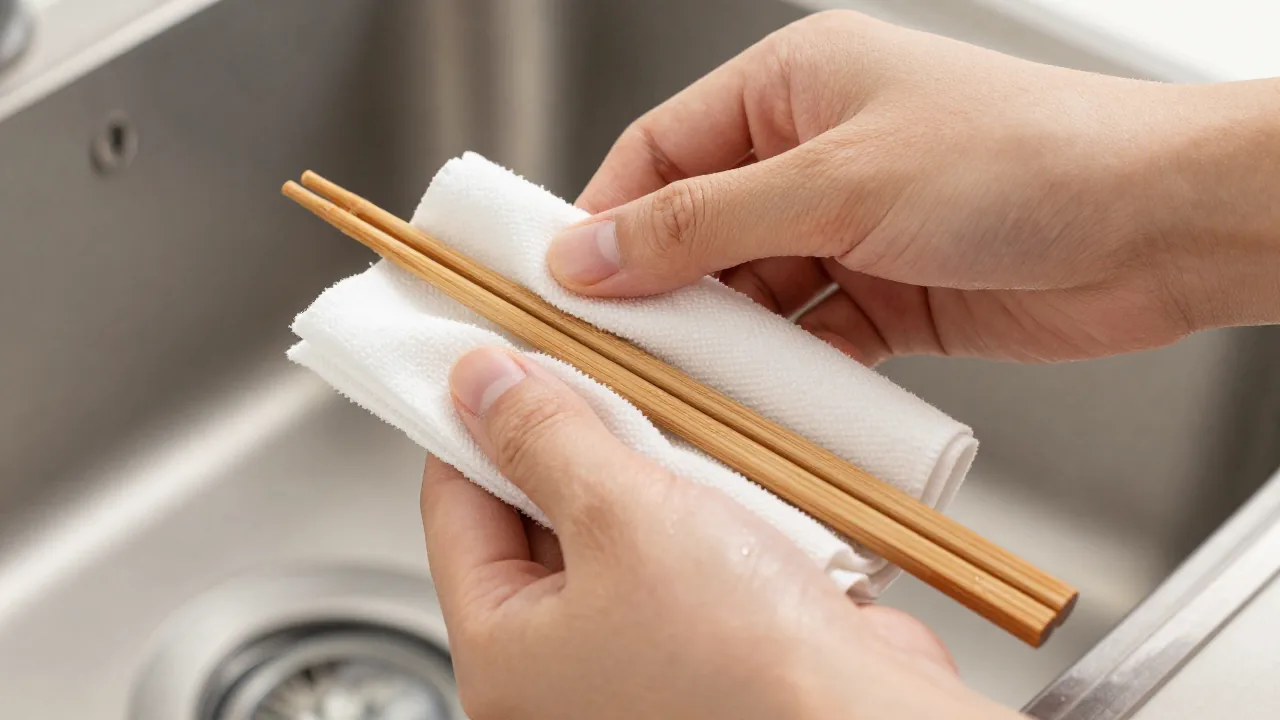
Start with the eating tips. After rinsing, wipe the tips and the upper ends with a clean towel so visible water is gone before the chopsticks go into a holder.
This matters most for bamboo and wood because water can sit along the grain and at the narrow tip. A quick wipe is not the whole drying process, but it removes the water most likely to drip into storage.
Do not bundle the pair tightly while it is still wet. Keep the two sticks slightly separated so air can reach the inside surfaces as well as the outside edges.
Step 2: Set up airflow in an open holder
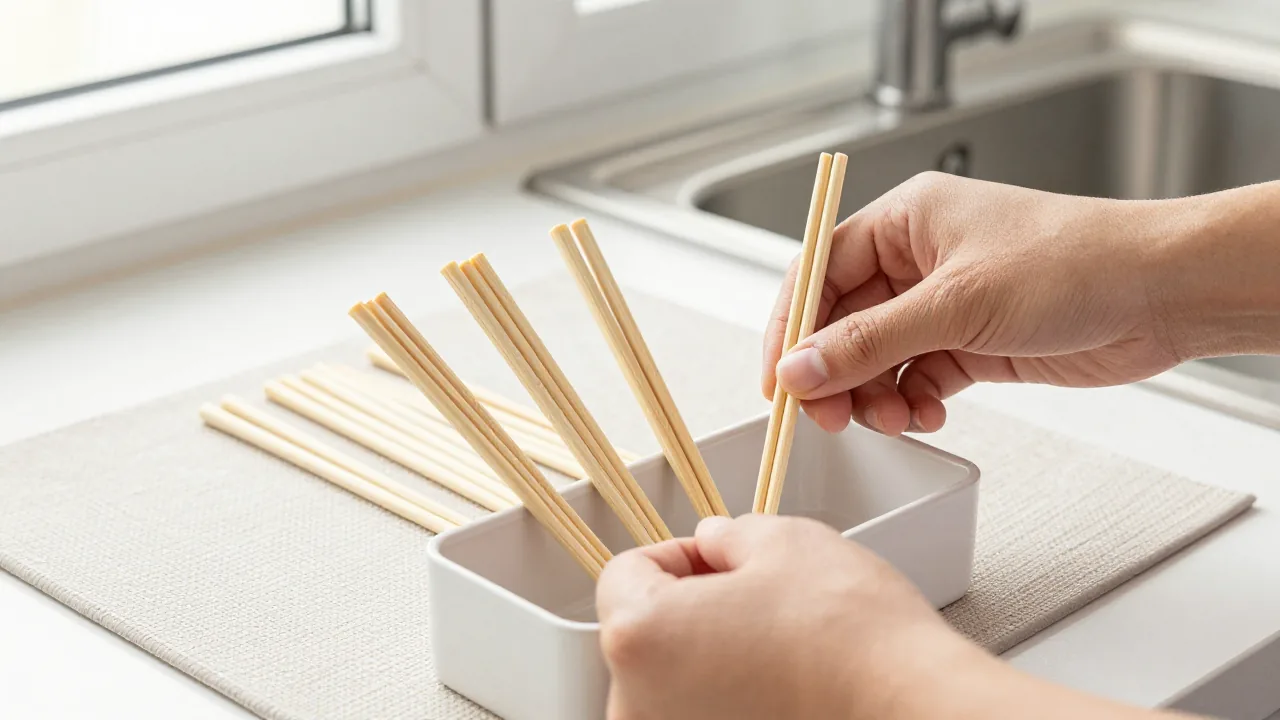
An open holder works better than a closed drawer right after washing. Stand the chopsticks with enough space for air to move around the tips and handles.
If you dry them flat, use a towel or drying mat and turn the pair once. Flat drying can work, but one side may stay damp if it sits against a wet surface.
Avoid placing freshly washed chopsticks into a sleeve, travel case, or tight utensil tray. Those spaces are for storage after drying, not for removing moisture.
Step 3: Check dryness before closing the drawer
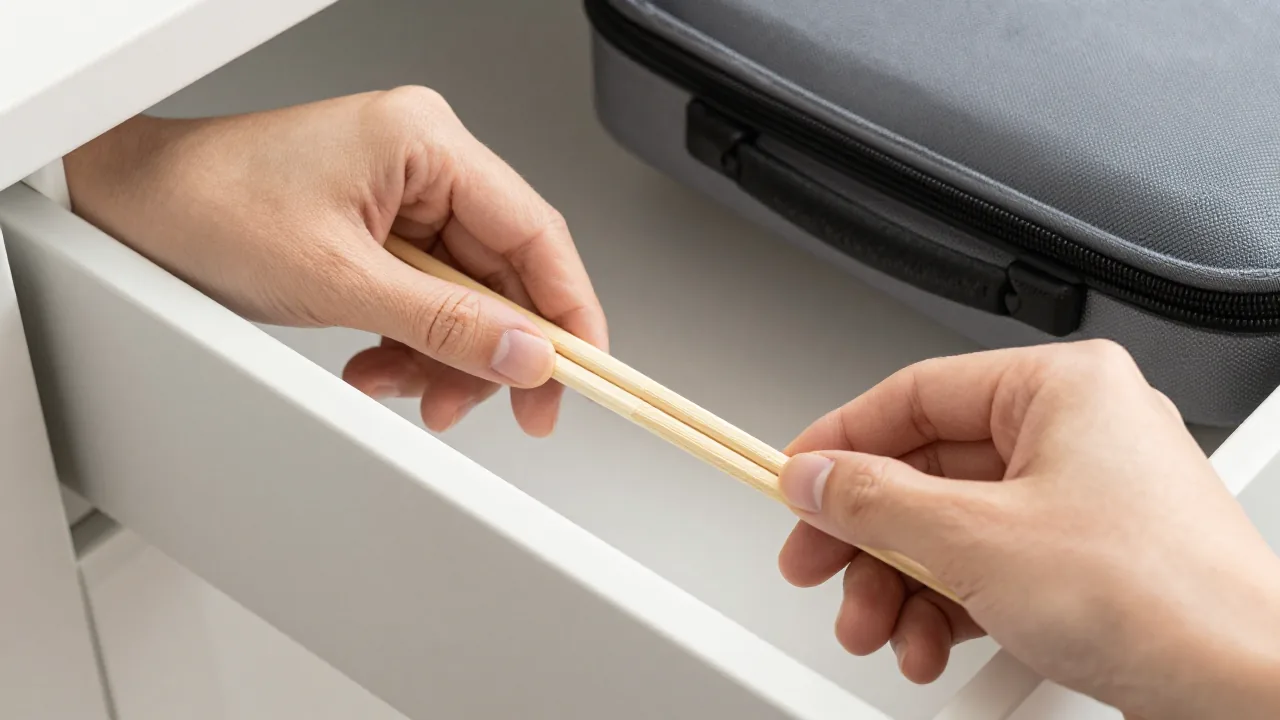
Before storage, touch the tips and the thicker upper ends. They should feel dry and smooth, not cool, sticky, or rough.
If a bamboo or wooden pair keeps a damp smell after drying, leave it out longer and check whether the surface has changed. Persistent odor or roughness means the pair may no longer be suitable for regular meals.
For travel chopsticks, wait until the pair is dry before closing the case. A clean case will not solve trapped moisture if the chopsticks themselves are still damp.
Step checklist before storage
- Wipe visible water from the tips and upper ends.
- Separate the pair slightly instead of bundling wet sticks together.
- Use an open holder or towel setup with airflow.
- Keep damp chopsticks out of sleeves, cases, and closed drawers.
- Store only when the tips feel dry, smooth, and odor-free.
Drying method questions
How long should chopsticks dry after washing?
There is no fixed time for every pair. Store them only when the tips and upper ends feel fully dry, smooth, and odor-free.
Should chopsticks dry standing up or lying flat?
An open holder is usually convenient because air can move around the pair. Flat drying can work if you use a towel or mat and turn the pair once.
Can I put damp chopsticks back in a travel case?
No. Let travel chopsticks dry first, then close the case. A closed case can trap moisture around the tips and handle ends.
What if bamboo chopsticks smell damp after drying?
Leave them in open airflow longer and inspect the surface. Persistent odor, roughness, or deep staining is a replacement sign.