 Chopsticks Guide
Ceramic Chopsticks: Material Claims, Glaze Checks, Grip, and Care
Use a product-specific check to separate appearance from construction, verify intended food use, and decide whether the pair fits your grip and cleaning routine.
Quick Answer: Ceramic chopsticks can be a practical reusable option, but the label alone does not prove the exact body material, glaze, food-contact compliance, dishwasher tolerance, or drop resistance. Verify the maker's construction and food-use statement, inspect the entire surface and both tips, follow the product's care instructions, and stop using a pair that develops a chip, crack, sharp edge, or unstable repair.
Ceramic chopsticks at a glance
- Label
- May describe a fired-ceramic body, porcelain, a ceramic-coated surface, or a mixed construction; confirm the maker's specification
- Food-contact check
- Look for intended food use and information appropriate to the market where the pair is sold
- Grip
- Cross-section, tip texture, balance, and surface finish matter more than the word ceramic by itself
- Main tradeoff
- A rigid glazed pair can feel clean and precise, but a smooth finish may slip and a brittle body can chip if dropped
- Care
- Use the maker's washing, dishwasher, soaking, abrasive, and heat instructions
- Replace
- Retire a pair with chips, cracks, sharp edges, loose decorative parts, or an unknown repair on a food-contact surface
What the ceramic label can and cannot tell you
The phrase ceramic chopsticks sounds precise, but retail labels do not always describe construction in the same way. One pair may have a fired ceramic or porcelain body. Another may combine a ceramic-looking finish with a different core, decorative cap, or coating. A photograph cannot settle that difference, and a glossy surface is not a material certificate.
Start with the maker's specification. Look for the body material, any coating or decoration, the intended food-contact use, country of manufacture, and care limits. If the listing gives only a color or style name, treat the composition as unknown. This is especially important when a seller uses ceramic as an appearance term rather than a complete bill of materials.
That distinction changes the buying decision. A verified fired-ceramic pair may be judged for balance, tip shape, glaze condition, and breakage risk. A composite pair also needs the core, coating, and joint construction checked. The label does not prove durability, compliance in every country, or suitability for cooking over heat.
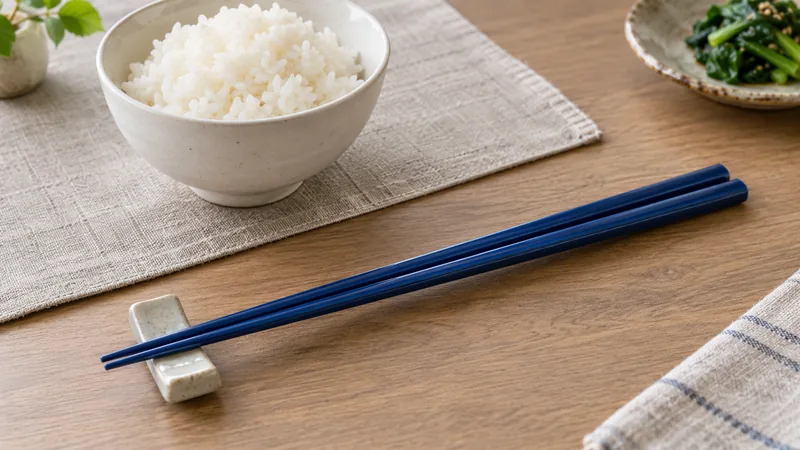
Food-contact suitability is a product claim, not a color test
Chopsticks are tableware, so their food-contact surface matters. The European Commission includes kitchenware and tableware within food-contact materials, and the FDA's ceramicware guidance explains why glaze, firing, intended use, and a reliable manufacturer matter. Those sources do not certify a particular pair; they show why buyers need product evidence rather than a visual guess.
For a new pair, look for an explicit food-use statement and a traceable maker or importer. Check whether the decoration reaches the eating tips or other areas that contact food. Do not use a pair marked decorative, not for food use, or carrying a warning that conflicts with eating use. If the material, origin, or intended use cannot be established, choosing documented tableware is the simpler decision.
Avoid the opposite mistake too: not every bright glaze or imported ceramic item is unsafe. Color is not a home test, and this guide does not diagnose contamination. The practical screen is documentation, intended use, intact condition, and compliance information relevant to where the product is sold.
Grip and durability depend on shape as much as material
A ceramic pair can feel firm because it does not flex like thin bamboo. That rigidity may help a user keep the tips aligned, but it does not automatically make the pair easy to control. A round, polished shaft can rotate in the fingers, while a square or gently faceted handle may feel steadier. Fine texture near the tips can matter more than the material name when lifting noodles, tofu, or slick vegetables.
Weight varies with length, diameter, hollowness, and construction. Compare the pair in hand if possible: close the tips several times, notice whether the sticks feel top-heavy, and check whether both shafts move as a matched pair. Beginners usually benefit from predictable balance and usable tip texture rather than the heaviest or most decorative set.
Ceramics are hard but brittle. The Canadian Conservation Institute notes that ceramic objects can crack or break on impact. That general material property is relevant to handling, but the actual drop resistance of chopsticks is product-specific. A dining table surface, tiled floor, thin tip, or bonded decorative section can all change the outcome.
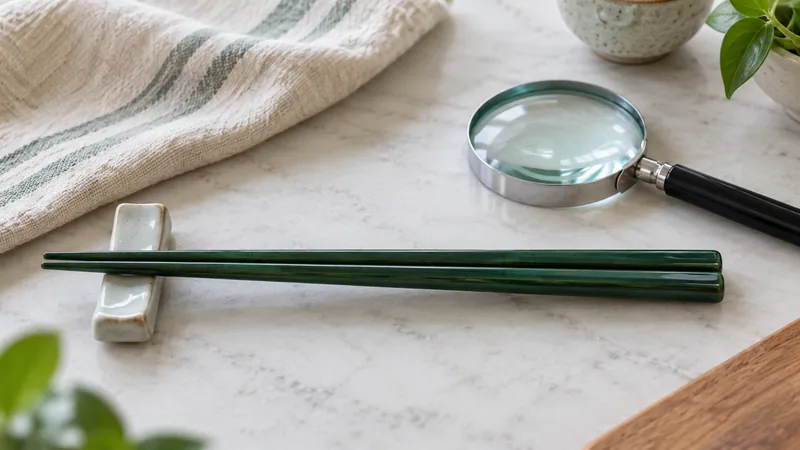
Inspect the pair before buying and before each use
Begin with the two tips. They should meet evenly without one crossing far above the other. Look along each shaft for a bow, twist, sharp seam, rough patch, bubble, exposed core, or decoration that feels loose. Small visual variations can be normal in handmade work, but a food-contact surface should not have a sharp or unstable defect.
Next inspect the glaze under clear light. A chip at the tip matters more than a harmless color variation because the tip repeatedly touches food and the mouth. Treat a visible crack, flaking decoration, sharp edge, or repaired food-contact area as a reason to stop and consult the maker or replace the pair. Do not sand or grind a glazed tip and then assume the altered surface is suitable for food.
Finally, read the product dimensions and care statement. Confirm length, cross-section, dishwasher status, temperature limits, and whether the pair is for dining only. Ceramic-looking chopsticks should not be treated as cooking chopsticks unless the maker explicitly supports that use.
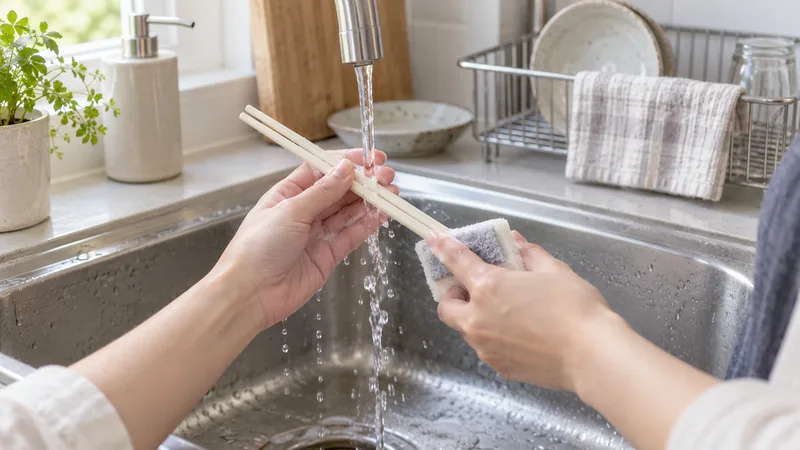
Clean according to the maker, then inspect before storage
Product instructions take priority because ceramic chopsticks do not share one universal construction. If the maker specifies hand washing, use a soft sponge and mild dishwashing liquid, rinse well, and dry the pair before storage. If the pair is labeled dishwasher safe, follow the stated rack position and temperature limits instead of assuming every glazed or decorated pair can use the same cycle.
Avoid abrasive pads on decorated or glossy surfaces unless the maker allows them. Do not move a very cold pair directly into very hot water, use it over an open flame, or leave it soaking for long periods without product guidance. These are conservative handling choices, not claims that every pair will fail under those conditions.
After washing, run your eyes and fingertips along the non-sharp portions of the shaft and inspect both tips. Store the pair where it will not be knocked against heavy metal utensils. A vented tray, divided drawer, or stable chopstick case protects the surface better than a crowded loose bin.
Choose ceramic only when its tradeoffs fit the meal
Choose a documented ceramic pair when you like a rigid feel, can protect it from drops, and are comfortable following product-specific care. Prefer a faceted handle or textured tip if polished round chopsticks tend to rotate in your fingers. For a shared household, make sure every user can identify the care limit and inspect the pair after a fall.
Choose wood or bamboo when light weight and surface grip matter most, accepting that moisture management and replacement intervals depend on finish and construction. Choose stainless steel when impact resistance and a metal surface suit the household, accepting that smooth pairs can feel slippery. Choose fiberglass-reinforced resin only after verifying the exact product material and food-contact information rather than relying on a broad category label.
There is no single best chopstick material for every person. A useful choice combines verified construction, comfortable control, realistic cleaning habits, and an intact food-contact surface. Decoration should come after those checks, not replace them.
A five-step ceramic chopstick check
- Identify: confirm the body, coating, decoration, and any mixed components.
- Verify: look for intended food use, a traceable maker, and applicable compliance information.
- Handle: test tip alignment, balance, cross-section, and surface grip.
- Inspect: reject chips, cracks, sharp edges, loose parts, and unknown food-contact repairs.
- Care: follow the exact washing, dishwasher, heat, and storage instructions.
Questions about ceramic chopsticks
Are ceramic chopsticks safe to eat with?
They can be suitable tableware when the product is intended for food contact, comes from a traceable maker, has an intact surface, and is used according to its instructions. The word ceramic alone is not a safety certificate.
Can ceramic chopsticks go in the dishwasher?
Only when the maker labels that exact pair dishwasher safe. Glaze, decoration, joints, and mixed materials can change the care limit.
Are ceramic chopsticks slippery?
Some polished round pairs are slippery, while faceted handles and textured tips can improve control. Shape and finish matter more than the category name alone.
What should I do if a ceramic chopstick chips?
Stop using the pair for eating. A chipped tip or sharp edge is a physical injury risk, and an unknown repair does not restore the original food-contact specification.
Are ceramic chopsticks better than wooden chopsticks?
Neither is universally better. Ceramic can offer a rigid, smooth feel but needs protection from impact; wood is usually lighter and grippier but has different moisture and care needs.
Sources and related guides
The FDA's lead-glazed pottery guidance explains why intended use, glaze production, condition, and a reliable manufacturer matter. Health Canada's cookware guidance covers glazed ceramic foodware and maker instructions. The European Commission food-contact overview establishes the broader kitchenware and tableware context. The Canadian Conservation Institute is used only for the general hard-but-brittle material observation.
Compare other options in the chopstick material guide, the types of chopsticks overview, and the dishwasher-safe chopsticks guide. For the table accessory rather than the utensil, see the ceramic chopstick rest guide.