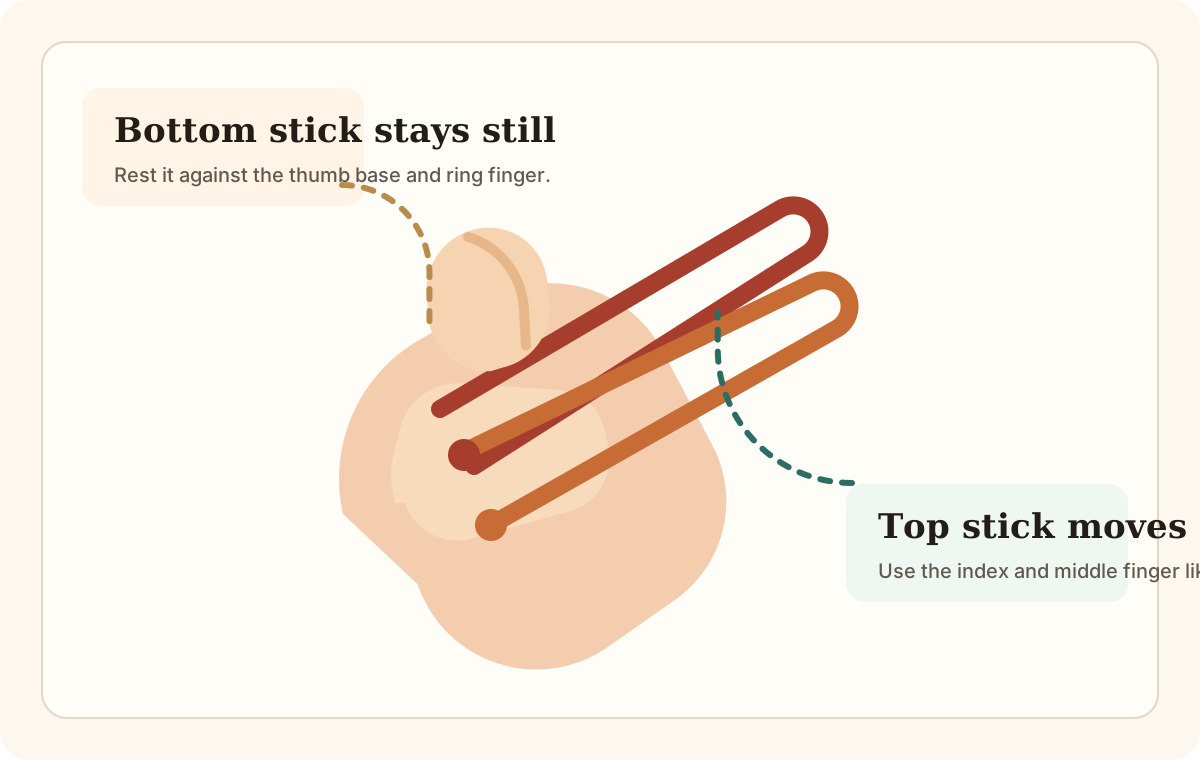
The core rule is simple: keep the lower chopstick steady and move the upper chopstick with your fingers. Most beginners struggle because both sticks move at the same time. Once the lower stick stays still, the grip becomes much easier to control. Left-handed learners can use the same mechanics with the setup adjustments in the left-handed chopsticks guide.
The next thing to check is your practice food. Start with larger, stable pieces before trying slippery noodles or loose rice.
Short Answer
What is the easiest beginner method?
Rest the bottom chopstick against the base of the thumb and the ring finger. Hold the top chopstick like a pencil. Only the top stick should move when picking up food.
Beginner checklist
Bottom stick stays still
Top stick moves
Start with stable food
Practice short sessions
Steps
How to hold chopsticks step by step
- Place the lower chopstick on the base of the thumb and let it rest against the ring finger.
- Hold the upper chopstick the way you hold a pencil, using the thumb, index finger, and middle finger.
- Keep the lower chopstick mostly still.
- Use the index and middle fingers to move the upper chopstick up and down.
- Practice closing the tips evenly before picking up food.
That lower-stick stability is the real turning point. Once it stops wobbling, control improves quickly.
What to practice with first
Do not start with loose rice unless that is the food you specifically need to solve. Most people learn faster with larger, stable pieces first, because success comes from repeating clean pickup movement.
Good first foodsVegetable pieces, tofu cubes, dumplings
Second step foodsNoodles, sliced meat, sushi
Later challengeLoose rice and very slippery foods
Common beginner mistakes
The most common mistake is gripping too tightly. The second is moving both sticks at once. The third is choosing slick, heavy, or oversized chopsticks too early.
If the grip feels unstable, fix the hand position before blaming yourself. Bad beginner equipment makes learning harder than it needs to be.
What kind of chopsticks help beginners most?
Beginners usually do better with bamboo, wood, or textured fiberglass. These materials often give more grip than polished steel. Medium length and moderate weight are usually easier than very long or decorative pairs.
Compare beginner-friendly chopsticks
Practical decision framework
For practice pages, treat every recommendation as a way to reduce early friction: choose easier food, use a grippier pair, and repeat the same motion before increasing difficulty.
A useful chopsticks page should answer three separate questions: who is using the chopsticks, what food or setting they are used for, and what tradeoff matters most. A beginner needs control. A daily home user needs cleaning convenience and comfort. A gift buyer needs presentation without losing function. A restaurant or takeout setting needs predictable serving logistics.
The biggest mistake is choosing only by appearance. Very polished metal, glossy lacquer, long ceremonial pairs, or decorative gift sets can look impressive but feel difficult during real meals. On the other hand, a plain bamboo or wooden pair may be easier for learning because the surface has more grip and the weight is more forgiving.
Use this page as a checklist before moving to a product recommendation: check grip, tip shape, length, weight, care instructions, and whether the pair fits the actual meal. That structure keeps the advice practical and prevents one-size-fits-all recommendations.
When a page compares several options, the final recommendation should explain why one tradeoff matters more than another. Grip matters most for new users. Cleaning matters most for daily household use. Packaging and finish matter more for gifts. Table placement matters for etiquette and hosting. Separating those priorities makes the guide useful for real decisions instead of repeating generic advice.
If the user is still unsure, the safest starting point is a medium-length pair with moderate weight and visible surface texture. It gives enough control for practice without locking the user into a specialized style. After that, the reader can move toward metal for durability, lacquered wood for presentation, training chopsticks for children, or rests and holders for formal table settings.
The final step is to connect the current topic to the next decision. If the problem is hand control, move to the holding guide and practice foods. If the problem is buying, compare bamboo, wood, metal, fiberglass, and training sets before choosing a product. If the problem is table behavior, check etiquette and rest placement instead of buying another pair. That path keeps the reader moving through useful pages rather than leaving with a partial answer.
For search and shopping intent, the guide should also make the evaluation criteria visible enough to stand alone in summaries. A reader should be able to understand the recommended user, the likely drawback, and the next comparison without relying on another paragraph. This is especially important for older guide pages because short answers can look useful at first but still fail to help a visitor choose, practice, or buy with confidence.
 Chopsticks Guide