 Chopsticks Guide
Chopstick Length Guide: Choose for Hand Fit, Bowls, and Heat
Choose chopstick length by testing grip control, bowl clearance, travel storage, material weight, and extra cooking reach instead of height alone.
Choose chopstick length by use and control, not height alone. Everyday eating chopsticks should let the hand move the upper stick without the back ends colliding with the palm; travel pairs must still fit the case; cooking chopsticks need extra reach from heat. Test grip, tip alignment, bowl clearance, weight, and storage before buying.
Length decisions that affect use
- Primary decision
- Choose the task first: eating, compact travel, serving, or cooking.
- Table control
- A usable pair allows the upper stick to move while the tips remain easy to align.
- Travel constraint
- Case length and bag storage matter, but the pair must remain controllable.
- Cooking use
- Longer cooking chopsticks add distance from steam and hot cookware.
- Common mistake
- Height or hand span alone does not account for taper, weight, bowl shape, or technique.
Start with the task instead of one standard length
A chopstick length guide should begin with the task. Everyday eating, a compact lunch kit, serving from shared dishes, and cooking over heat create different reach and storage needs. One standard number cannot optimize all four.
Keep eating and cooking pairs separate when possible. A very long pair can feel slow at a small bowl, while a short eating pair gives little distance from steam, oil, and hot cookware.
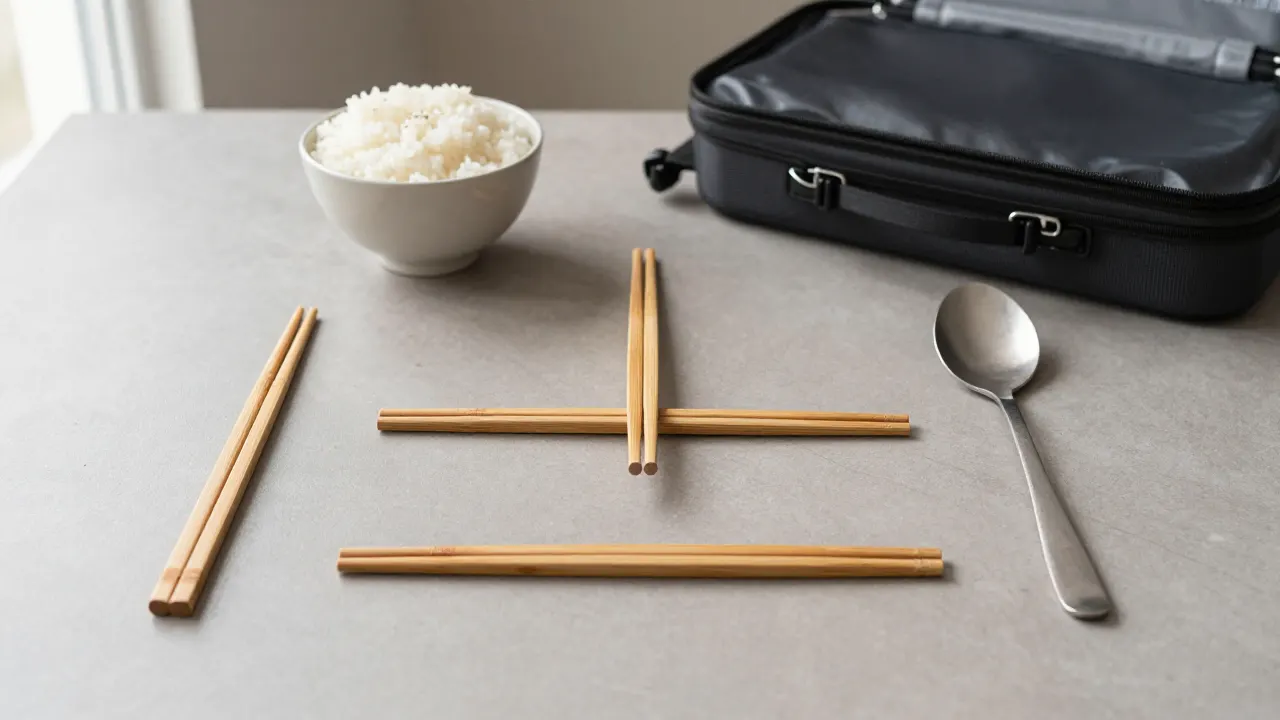
Test grip point and tip control at the table
Hold the pair at the point that feels natural, then open and close only the upper stick. The back ends should not collide with the palm, and the tips should meet without a large wrist correction. Pick up a soft cube, a small bean, and a slippery piece to compare control.
Beginners often benefit more from a stable, moderately weighted pair with textured tips than from choosing by length alone. If the pair feels tip-heavy or the hand keeps sliding toward the middle, compare taper and material too.
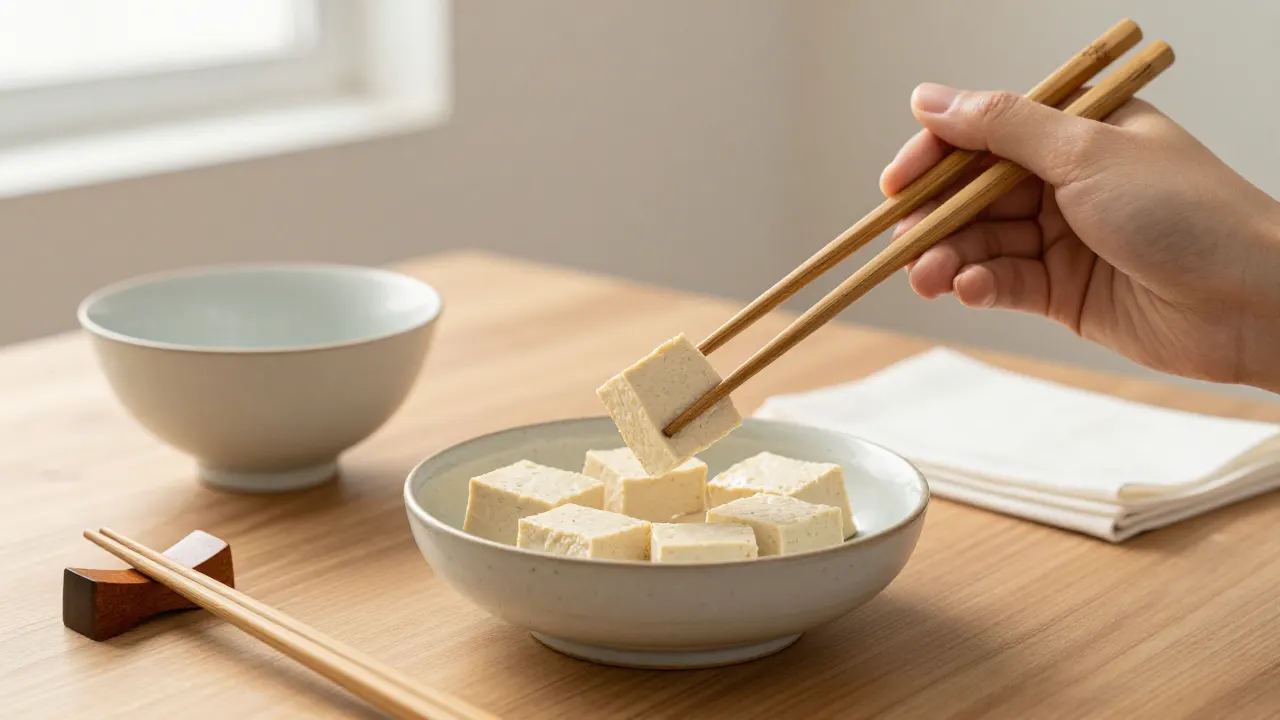
Check bowls, shared dishes, and storage clearance
Test the pair with the bowls and plates you actually use. Deep bowls, wide shared platters, and crowded place settings change how much reach is useful. Check whether the back ends strike a cup, sleeve, or neighboring setting.
For travel, measure the case and bag compartment, then confirm that the compact pair still clears a lunch container comfortably. Easy storage is not a gain if the tips are hard to control.
Use longer cooking chopsticks for heat distance
Cooking chopsticks are longer so the hand can stay farther from steam and hot surfaces while stirring, turning, or lifting food. Extra reach does not remove burn risk. Use cookware and techniques suited to the heat, and keep the hand out of the steam path.
Check stiffness and grip when wet. A long pair that flexes excessively or becomes slippery may be less useful than a slightly shorter, stable cooking tool. Do not use decorative eating chopsticks as heat tools unless the material and finish are suitable.
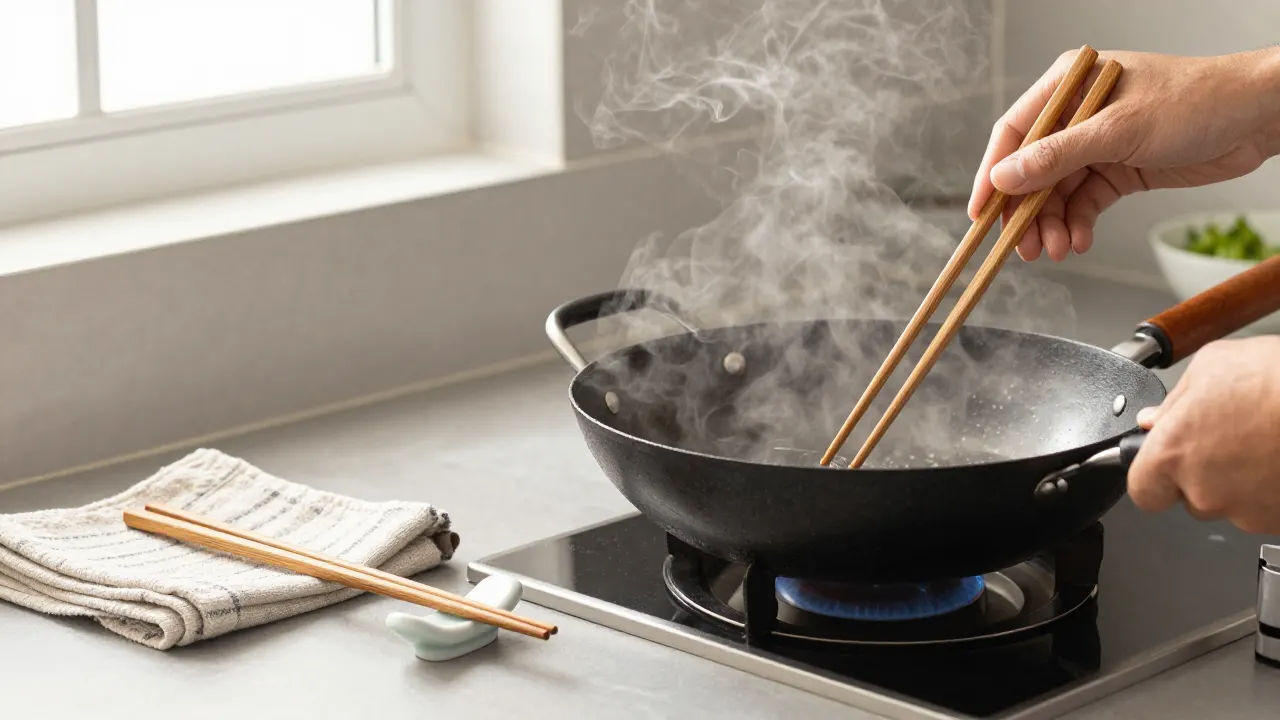
Compare length with material, taper, and weight
Length interacts with material, taper, surface, and weight. Stainless steel can feel different from hollow metal, dense wood, bamboo, or lacquered pairs at the same length. Tip shape influences precision, while balance influences fatigue and speed.
Compare two pairs over the same foods before buying a large set. Choose the one that stays aligned, clears your tableware, stores safely, and suits the intended heat or cleaning routine.
Five tests before choosing chopstick length
- Name the task: eating, travel, serving, or cooking.
- Check grip point, tip alignment, and back-end clearance.
- Test with your usual bowls and shared dishes.
- Confirm case and drawer storage without sacrificing control.
- Compare length together with material, taper, weight, and finish.
Chopstick length questions
What is a good chopstick length for adults?
There is no single best length. Choose by task, grip control, tableware, weight, and storage.
Are shorter chopsticks easier for beginners?
Sometimes, but stability, taper, texture, and weight can matter as much as length. Test tip alignment with real food.
Why are cooking chopsticks longer?
They provide extra reach from steam and hot cookware, though safe technique is still required.
Does hand size determine chopstick length?
Not by itself. Hand size does not account for grip style, bowl shape, material, balance, or intended use.