Chopstick Rest Guide: Table Setting, Size, and Cleaning Checks
Use this chopstick rest guide to choose a stable rest, place it correctly on the table, avoid messy contact points, and clean the material after meals.
A chopstick rest guide should focus on table position, pair stability, material, and cleaning. Choose a rest wide enough to hold the tips off the table, place it where the pair can be returned neatly, and match ceramic, wood, or metal to your cleaning routine.
Setup facts for a stable chopstick rest
- Materials
- Ceramic rinses easily; wood and bamboo need full drying
- Setup step
- Place the rest near the tip side inside the personal setting
- Difficulty
- Low, but narrow rests can let round chopsticks roll
- Tools
- One rest, one chopstick pair, and a flat table surface
- Common mistake
- Buying a decorative rest that crowds bowls or serving dishes
Step 1: Test whether the rest holds the pair
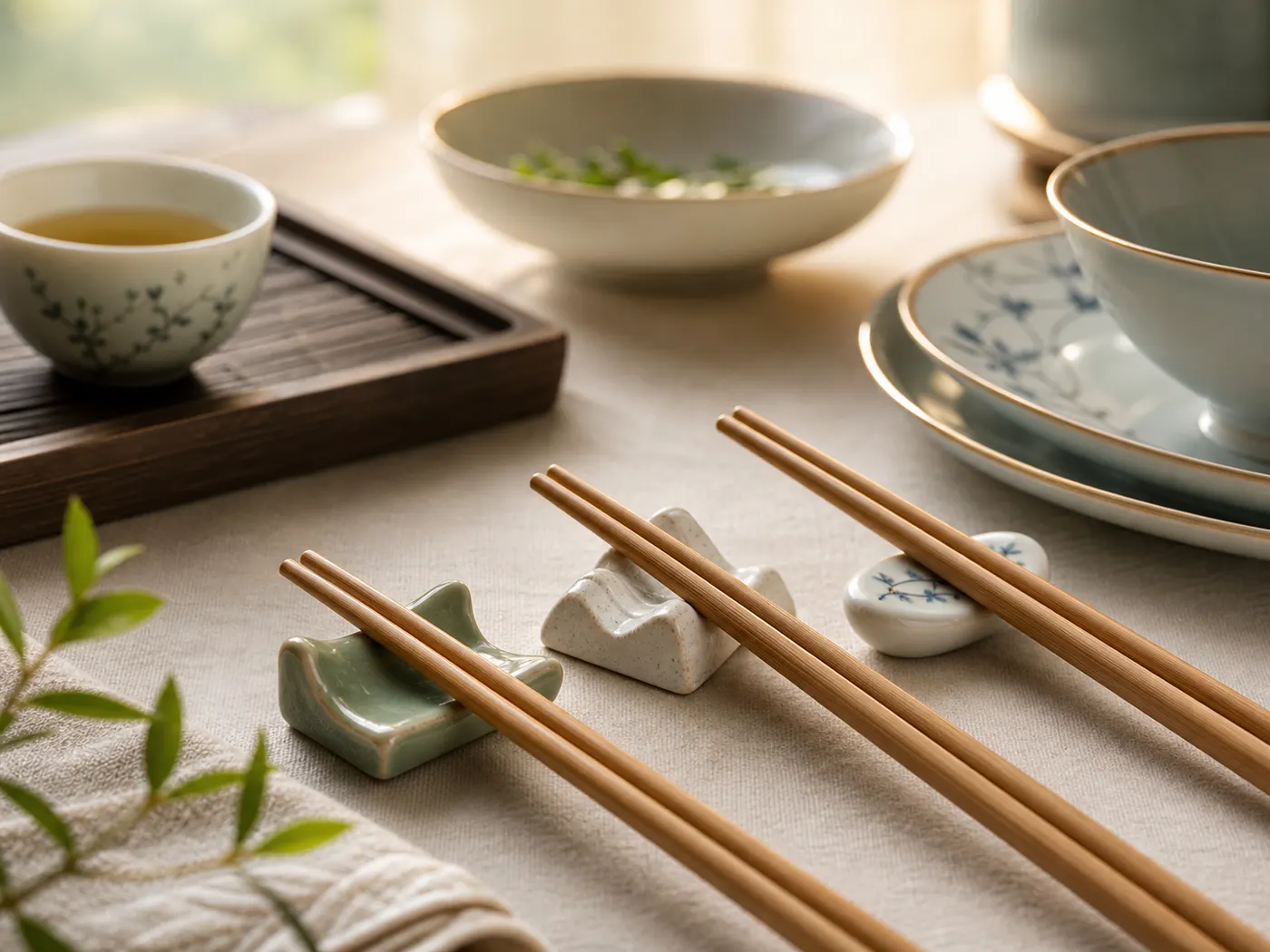
A chopstick rest is useful only if the pair stays balanced when you set it down. Very narrow pieces can look elegant but let round chopsticks roll, especially on a small table.
Check the groove, width, and height together. The tips should lift clear of the table without making the handle end tilt awkwardly into a bowl or plate.
For home use, stability matters more than decoration. A simple ceramic rest that holds different chopstick shapes will get used more often than a fragile piece that only matches one formal setting.
Step 2: Set up the rest where tips return naturally
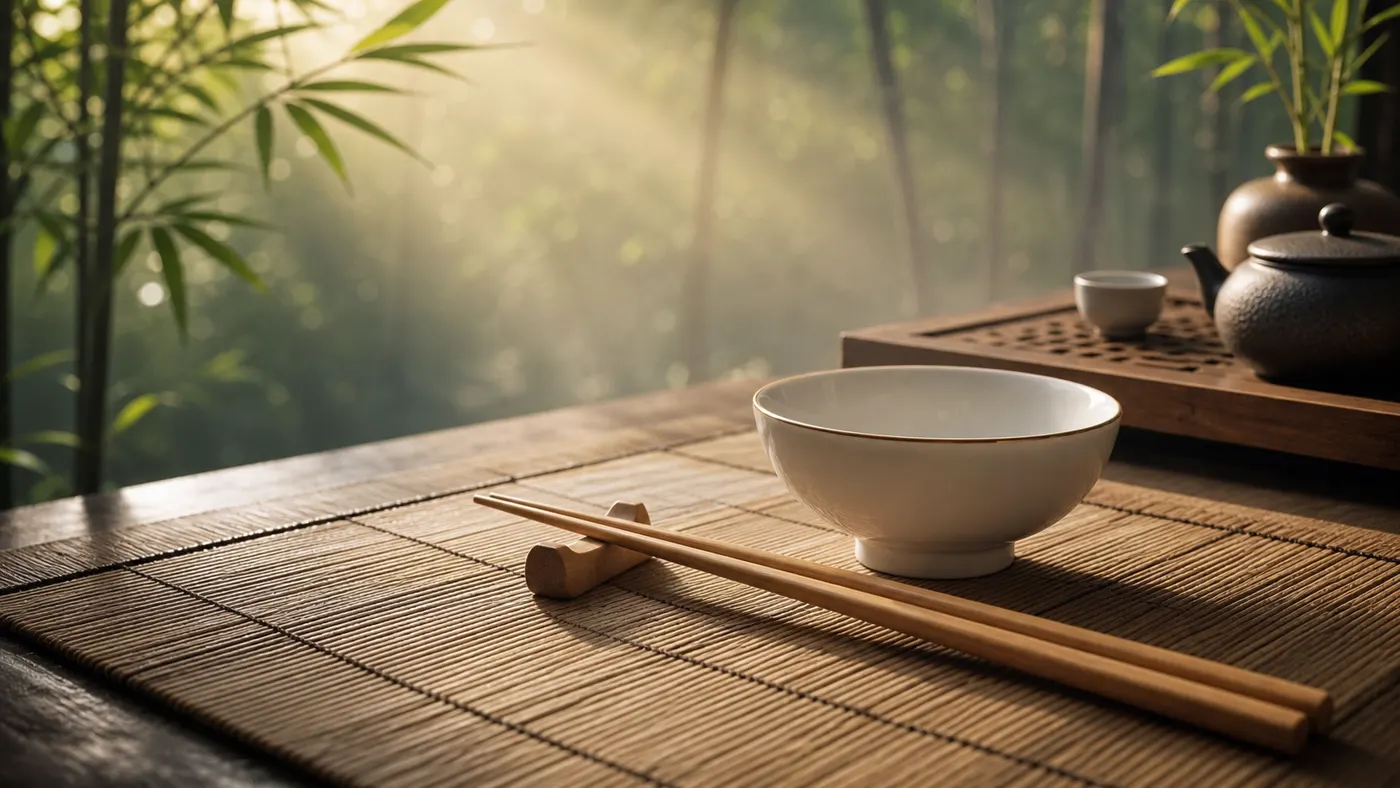
The rest usually belongs near the tip side of the chopsticks, close enough that the pair can be set down without crossing bowls or shared dishes. If the rest is too far away, people stop using it.
At a tight table, keep the rest inside the personal place setting rather than in the middle of the serving area. The point is cleaner contact, not another obstacle.
For guests, a visible rest also answers a simple etiquette question: where should the chopsticks go between bites? That clarity is more useful than a decorative object with no obvious placement.
Step 3: Clean the rest after the meal
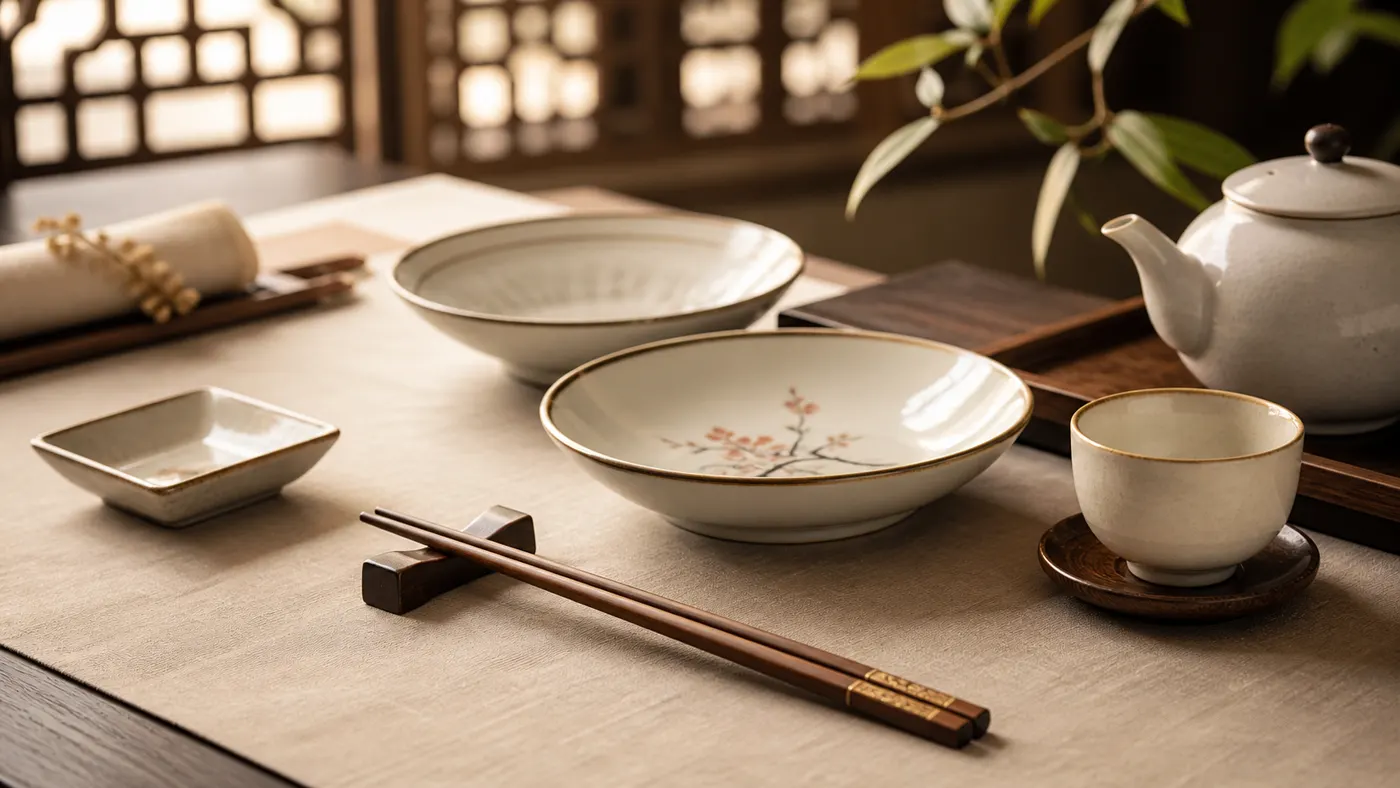
Ceramic and glazed rests are easiest to rinse after sauce or oil touches the tips. Wood and bamboo can look warmer, but they need full drying before storage.
Metal rests are durable but can feel slippery with polished chopsticks. If you use stainless steel pairs, test whether the rest has enough texture to stop rolling.
Do not treat the rest as a cleaning shortcut. It keeps tips off the table during the meal; the chopsticks and the rest still need proper washing afterward.
Step checklist before buying a chopstick rest
- Set a pair on the rest and check for rolling.
- Confirm the tips lift clear of the table.
- Choose a material you will actually clean and dry.
- Avoid shapes that crowd bowls or shared dishes.
- Buy matching sets only after one rest works with your chopsticks.
Chopstick rest placement questions
What is a chopstick rest used for?
It gives the chopsticks a clean place to return between bites so the tips do not touch the table or roll into the serving area.
Where should a chopstick rest sit?
Place it near the tip side of the pair within the personal setting, close enough that the chopsticks can be returned without crossing dishes.
Are ceramic chopstick rests better than wooden ones?
Ceramic rests are usually easier to rinse. Wooden rests can work well, but they need careful drying after washing.
Do I need a chopstick rest for everyday meals?
No, but it is useful for cleaner table handling, guest settings, and meals where the pair is set down repeatedly.