How to use chopsticks left handed
Learn how to use chopsticks left handed with mirrored grip steps, practice drills, table comfort, and etiquette notes for beginners.
At a Glance: How to use chopsticks left handed
Basic Facts: Left-handed chopstick use is mainly a mirrored grip, not a different tool. The lower chopstick still stays stable while the upper chopstick moves. Seat position can make left-handed eating more comfortable at crowded tables.
- Left-handed chopstick use is mainly a mirrored grip, not a different tool.
- The lower chopstick still stays stable while the upper chopstick moves.
- Seat position can make left-handed eating more comfortable at crowded tables.
- Short practice drills help more than switching hands under pressure.
- Etiquette can vary, but comfort and control matter in everyday dining.
Mirror the standard grip first
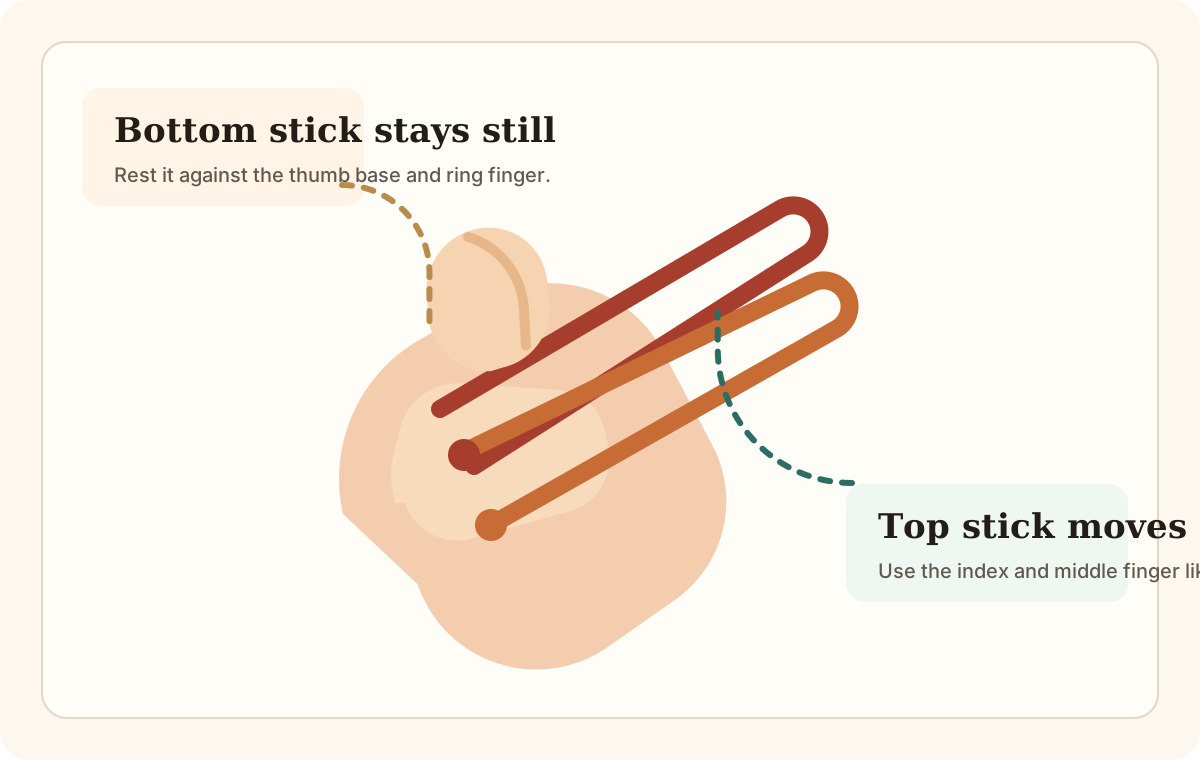
Learning how to use chopsticks left handed begins by mirroring the standard right-handed grip. The lower chopstick rests against the base of the thumb and the side of the ring finger. The upper chopstick sits between the thumb, index finger, and middle finger. The hand is different, but the job of each chopstick is the same.
The most important point is stability. When beginners ask how to use chopsticks left handed, they often try to move both sticks at once. Keep the lower stick still and let the upper stick open and close. This single habit solves more problems than changing chopstick style.
Set the lower chopstick like a rail
The lower chopstick should feel like a small rail. It supports food while the upper chopstick does the work. If the lower stick slides, rotate the hand slightly and reset the point where it touches the ring finger. Do not grip so tightly that the fingers become tense.
A left-handed learner can practice this without food. Hold the lower stick steady for thirty seconds, then add the upper stick and tap the tips together. This slow drill is one of the easiest ways to learn how to use chopsticks left handed without frustration.
Move the upper chopstick with two fingers
The upper chopstick moves through the index finger and middle finger while the thumb stabilizes. It should open and close like a small hinge. If the tips cross, the upper stick is probably sliding too far forward or the thumb is pressing unevenly. Reset rather than forcing the grip.
When practicing how to use chopsticks left handed, use larger pieces of food first: tofu cubes, vegetable pieces, dumplings, or thick noodles. Rice and tiny grains can wait until the grip is stable. Beginners improve faster when the practice food matches the skill level.
Choose a comfortable seat at the table
Left-handed chopstick use can feel awkward at a crowded table if elbows collide. If possible, sit at the left end of a bench or leave a little extra space on the left side. This is not a special rule; it is a practical comfort detail. Good seating can make how to use chopsticks left handed much easier during a shared meal.
In formal settings, follow the host and keep movements compact. Avoid pointing with chopsticks, waving them while speaking, or crossing into another person's space. Left-handed use is normal, but table awareness still matters.
Quick reference practice drill
Use this quick reference for a five-minute drill. Hold the lower chopstick steady for thirty seconds. Tap the tips ten times with only the upper chopstick moving. Pick up five large pieces of food. Pick up five smaller pieces. Then try one bite of rice or noodles. Stop if the hand becomes tense and reset the grip.
This drill teaches how to use chopsticks left handed through repetition rather than pressure. The learner should feel the lower stick become quiet and the upper stick become precise. That is the core movement.
Common left-handed mistakes
The first mistake is switching to the right hand because a diagram is right-handed. A left-handed learner can mirror the diagram instead. The second mistake is squeezing too hard. The third mistake is practicing only with difficult foods. The fourth mistake is ignoring table space.
A better approach is to practice at home, use clear mirror steps, and choose chopsticks with enough texture. Once the motion is natural, left-handed chopstick use feels like ordinary chopstick use. The goal is clean control, not copying someone else's hand.
Mirror practice for left-handed users
Many left-handed learners copy a right-handed diagram and feel that the angle is wrong. A better method is mirror practice. Place the diagram beside a mirror, or watch a right-handed video and reverse the movement in your own hand. Keep the lower chopstick still, then let the upper chopstick move from the index and middle fingers. The hand may look different, but the stability principle is the same.
When practicing how to use chopsticks left handed, use large pieces of food first. Cubes of tofu, folded noodles, or larger vegetables show whether the tips close evenly. Rice grains and small slippery foods can wait until the grip feels calm.
Table spacing and etiquette notes
Left-handed diners sometimes worry about bumping elbows in a crowded setting. The practical fix is seat choice, not changing hands. If possible, sit at the left end of a row or leave a little more space between place settings. Keep the chopstick tips pointed toward your own bowl, and avoid broad sideways movements when reaching for shared dishes.
This keeps how to use chopsticks left handed focused on comfort and respect. You do not need to perform a right-handed grip to be polite. You do need a stable grip, clean movements, and awareness of the people seated nearby.
Practice foods in the right order
Choose practice foods that teach one skill at a time. Start with firm cubes because they show whether the tips meet cleanly. Move to soft dumpling pieces or noodles when your grip can adjust pressure. Try rice only after the lower stick stays stable without squeezing. Very slippery foods should come last because they punish small mistakes and can make beginners tense.
This sequence is useful for how to use chopsticks left handed because left-handed learners often spend too much attention on hand orientation. Food order removes some of that pressure. The goal is not to finish a meal quickly on the first day. The goal is to build a grip that feels repeatable across different foods. Once that happens, speed improves naturally.
Troubleshooting common grip problems
If food slips forward, the tips may not be meeting evenly. Slow down and close the upper stick toward the lower stick instead of pinching from both sides. If your thumb gets tired, you may be squeezing too hard. Relax the thumb base and let the index finger guide the top stick. If the sticks cross near the tips, shorten the bite size and reset the lower stick against the ring finger.
If you feel awkward at a shared table, practice with an empty bowl and a few large pieces before the meal starts. The more predictable the grip feels, the less you will think about left and right. Good control comes from stability, small movements, and food choices that match your current skill level.
Short daily practice routine
Practice for five minutes with one easy food and one harder food. Stop before the hand becomes tense. Consistent short sessions build a more natural grip than one long session with frustration.
Final grip note
For how to use chopsticks left handed, the final test is simple: the lower stick stays quiet, the upper stick moves cleanly, and the bite reaches the bowl without rushing.
Final check
A final reminder for how to use chopsticks left handed: comfort, spacing, and a stable lower stick matter more than copying a right-handed angle.
Quick Reference
Use this page when the exact topic is how to use chopsticks left handed. Record the visible facts, compare the related pages, and keep the final interpretation modest. If the topic affects health, safety, law, finance, or a major personal decision, use qualified advice or direct evidence before relying on a cultural guide.
The practical next step is to open the most relevant internal link, compare the detail with the page you are reading, and write down one decision or question that can be checked in real life.
FAQ
Can left-handed people use chopsticks normally?
Yes. Most left-handed learners use a mirrored version of the same grip principles.
Do I need special left-handed chopsticks?
Usually no. Textured beginner-friendly chopsticks can help, but the grip is more important than a special tool.
Should I switch to my right hand for etiquette?
In most everyday settings, use the hand that gives you safe control. Formal expectations can vary by host or culture.
Why do my chopsticks cross when I use my left hand?
The upper chopstick may be sliding or the thumb pressure may be uneven. Reset the lower stick and move only the upper stick.