 Chopsticks Guide
How to Hold Chopsticks Left-Handed: A Practical First Setup
Learn how to hold chopsticks left handed with a simple lower-stick anchor, moving-stick check, and practice food sequence for everyday meals.
A left-handed grip does not need to copy a right-handed diner. Keep the lower chopstick supported and quiet in the left hand, then let the upper stick open and close with small finger movement.
Left-hand grip landmarks
- Working hand
- Use the left hand as the working hand; there is no need to reverse it for the person beside you.
- Lower chopstick anchor
- The lower stick stays supported against the base of the thumb and ring finger instead of opening and closing.
- Upper chopstick movement
- The upper stick is the one that moves, guided by the index and middle fingers.
- Practice method and food
- Start with soft cubes or broccoli, then move to rice and finally longer noodles.
- Common reset mistake
- If both sticks slide together, pause and rebuild the lower-stick anchor before squeezing harder.
Set up a left-handed practice place before you pick anything up
Start with a short, ordinary meal rather than a performance. Sit with the bowl in a comfortable place, put the chopsticks in your left hand, and give yourself a small plate with one or two easy items. A tofu cube, a piece of steamed broccoli, or a short cucumber slice makes it possible to see whether the tips meet. Long noodles and loose rice are frustrating first tests because they hide a poor pinch behind a pile of food.
Place one chopstick in the soft space at the base of the thumb, then let its lower end rest lightly against the side of the ring finger. This is the quiet stick. It does not need to be clamped down, and it should not travel up and down every time you reach for food. If the lower stick feels as though it is escaping, take a breath, lower your shoulder, and set it again before adding the second stick.
Lay the upper chopstick across the thumb and guide it with the index and middle fingers. The hand can look different from a right-handed diner's hand across the table, which is normal. What matters is the small gap at the tips: open it, close it, and watch only the upper stick travel. A relaxed setup is more useful than forcing a picture-perfect pose.
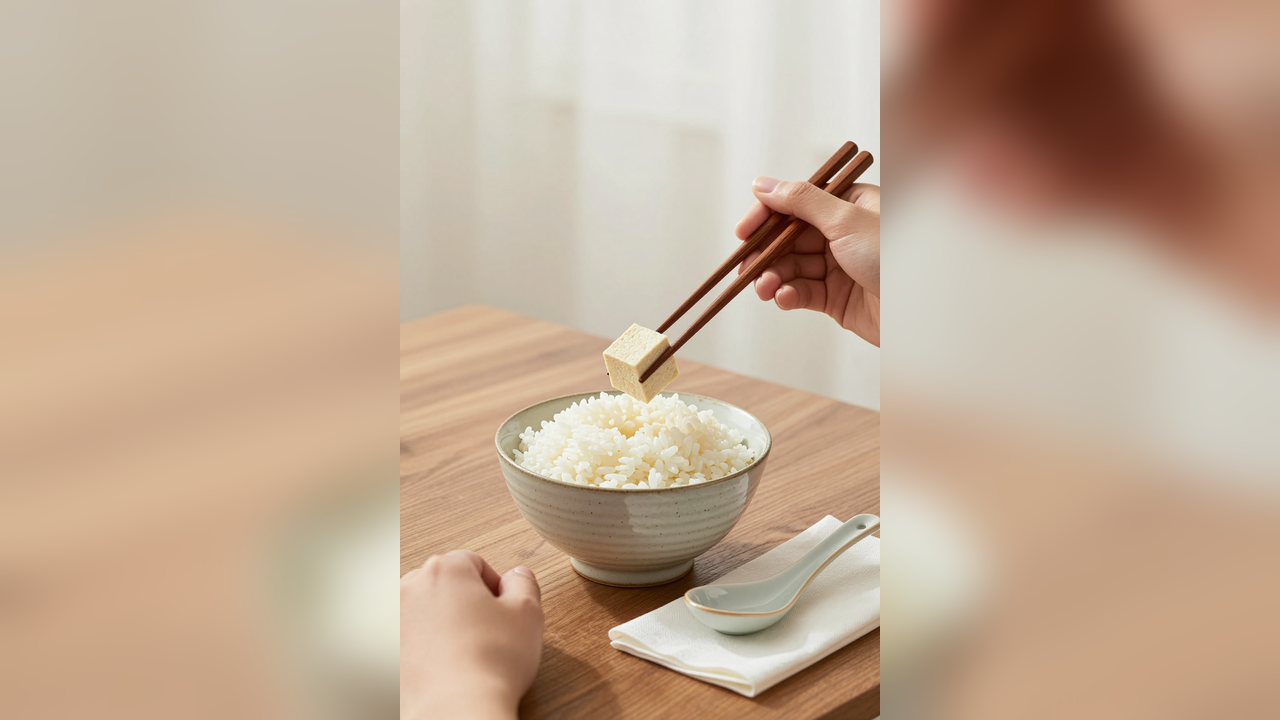
Anchor the lower chopstick, then move only the upper one
The clearest test is to hold a small soft cube above a bowl. Close the tips gently and lift just a few centimeters. When the food falls because both sticks have moved, the fix is usually not a tighter fist. Reset the lower stick against the thumb base and ring finger, then make the top stick do the opening and closing. The hand should feel like it has one stable rail and one small lever.
Try three slow pinches without lifting food. Let the tips touch, separate them by about the width of a pea, and touch again. Watch from the side if you can. If the ends cross, slide the upper stick outward a little rather than twisting the wrist. If the tips never meet, bring the sticks into the same line before you practice speed. The goal is a clean meeting point, not a dramatic squeeze.
Many left-handed beginners copy a mirror image of a right-handed grip and then keep changing finger positions when it feels awkward. A better approach is to keep the working hand natural and check the job of each stick. The lower stick supports; the upper one pinches. Once that division is clear, the grip can be adjusted for hand size without turning every meal into a correction session.
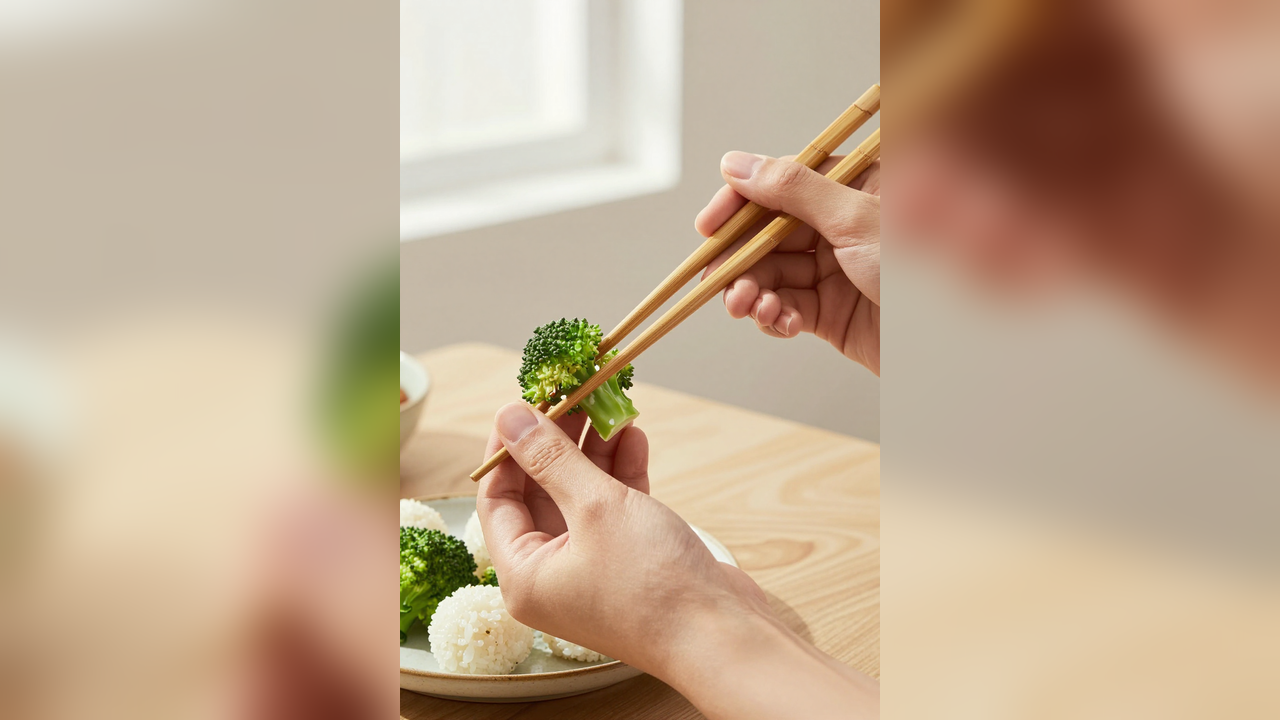
Use a small food ladder instead of testing yourself on noodles
Choose food that gives honest feedback. Soft cubes and broccoli florets are useful because they stay put when the tips meet. Next try a small bite of rice or a dumpling piece, which asks for a little more control without needing a wide opening. Only after those lifts feel steady should you move to noodles, where moisture and length can make even a sound grip look less certain.
With noodles, take a smaller bundle than you expect and lift it over the bowl rather than out across the table. Bringing the bowl closer is practical, not a shortcut. The lower stick should still stay supported while the upper stick closes around the bundle. If the noodles slide, check the amount first. A narrow bundle is easier to feel than a large clump, and it keeps the practice focused on control rather than cleanup.
The same progression works at home, in a restaurant, or at a friend's table. You do not need a special left-handed set to learn the movement. A pair with tips that are not extremely smooth can make the early food ladder easier to read, but a stable two-stick motion is more important than buying a different material before you have tried the setup.
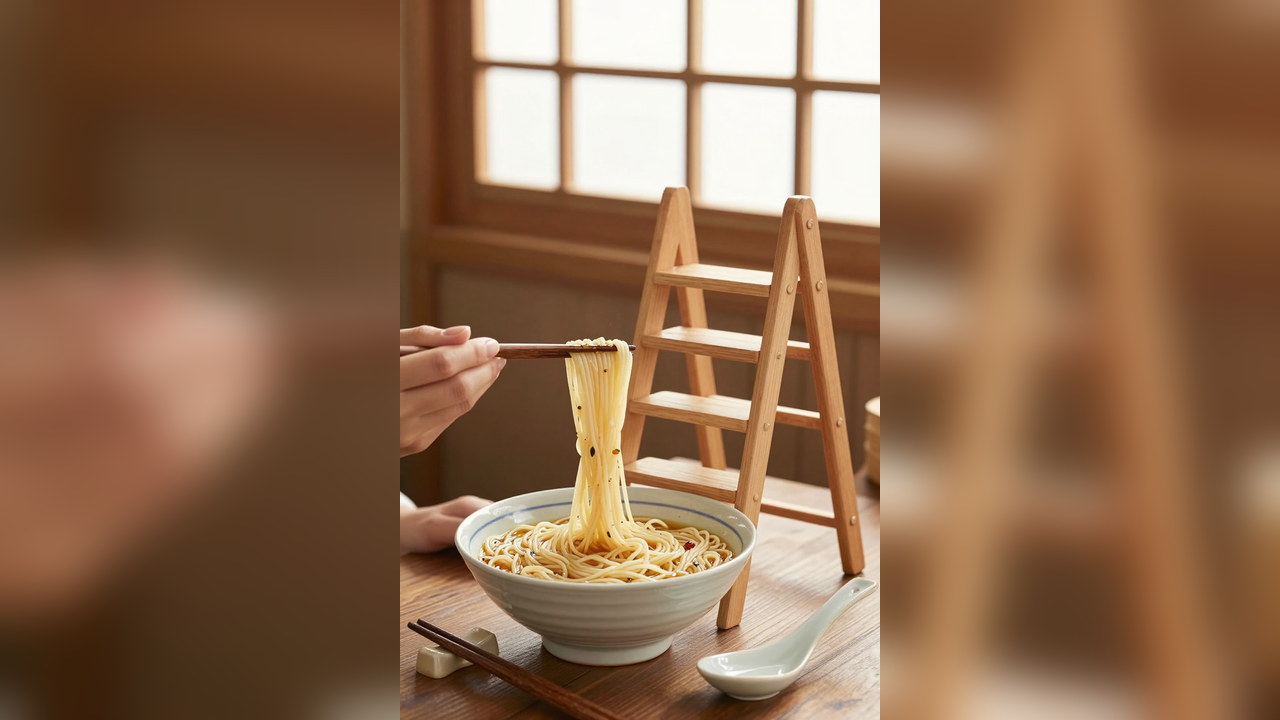
Carry the same grip into a shared table without copying another diner's hand
At a shared table, your left hand may sit closer to a bowl, spoon, or neighboring place setting than a right-handed diner's would. Give the elbow a little room and keep the chopsticks over your own bowl while you practice. There is no need to announce the hand you use or change sides to match someone else. A calm, controlled movement is easier for everyone around the table to follow.
Table manners still matter, but handedness is not a mistake. Use a rest when one is provided, avoid pointing with the sticks, and place them down before reaching across dishes. Those habits are separate from the mechanics of your grip. Keeping them separate makes the technique easier to learn and avoids treating a normal left-hand setup as a problem that needs correcting.
When a meal feels difficult, return to the smallest useful check: can the tips meet cleanly while the lower stick stays quiet? If yes, choose a smaller bite and continue. If not, reset the two sticks at the bowl before trying again. That is a practical next step for an everyday meal, and it leaves room for your own comfortable hand position.
A two-minute reset before your next meal
- Put the lower chopstick in place before laying the upper one across the thumb.
- Open and close the tips three times without food; look for one moving stick.
- Lift one small tofu cube or broccoli floret over the bowl before choosing a harder food.
- Take a narrow noodle bundle and keep it above the bowl while you test the pinch.
- If both sticks travel together, rebuild the lower-stick anchor instead of squeezing harder.
Left-handed chopstick questions
Should a left-handed person hold chopsticks differently?
Use the left hand as the working hand and keep the basic jobs of the two sticks clear: the lower stick stays supported while the upper stick moves. Hand size and comfort can change the exact finger placement, so there is no need to copy another diner's shape exactly.
Where should the lower chopstick rest in a left hand?
The lower chopstick can rest in the soft space at the base of the thumb and against the side of the ring finger. It should feel supported rather than tightly clamped, because its job is to provide the quiet side of the pinch.
What food is easiest for left-handed chopstick practice?
Begin with soft cubes, broccoli florets, or short cucumber slices because the tips can meet around them clearly. Move on to small bites of rice or dumpling, then try a narrow bundle of noodles once the upper stick is moving independently.
Is it rude to use chopsticks left-handed at a shared table?
No. Use the hand that is natural for you. General table habits still apply, such as keeping chopsticks over your own bowl, using a rest when available, and not pointing or reaching across shared dishes with them.