 Chopsticks Guide
Antique Silver Chopsticks: Identification Checks Before Cleaning
Antique Silver Chopsticks: Identification Checks Before Cleaning. Use identification checks before cleaning antique silver chopsticks, while documenting conditi
Quick Answer: Start by photographing the entire pair, any case, and every companion object before cleaning. Record length, weight, profile, tip shape, seams, joints, decoration, wear, repairs, and all marks exactly as seen. Do not infer silver purity from shine or tarnish, and do not erase patina to hunt for a brighter surface. Compare the object with cataloged museum examples for vocabulary, then ask a qualified professional about testing, conservation, value, or safe use. Until material and condition are established, store the pair dry and supported and treat it as a collection object rather than eating utensils.
Antique chopsticks: object and record facts
- Object label
- Record whether the object is a pair, part of a travel set, or accompanied by a case or utensils.
- Material boundary
- A silver color or dark tarnish does not by itself prove sterling silver, purity, or age.
- Evidence
- Photograph marks, dimensions, weight, construction, wear, repairs, and provenance separately.
- Cleaning boundary
- Do not polish an unfamiliar historical surface before identifying coatings, inlays, or fragile joins.
- Use boundary
- Collection interest does not establish that an old object is safe for contact with food.
Begin with the whole object, not the metal guess
# Antique Silver Chopsticks: Identification Checks Before Cleaning An old pair of silver-colored chopsticks can be interesting before anyone knows its exact metal, date, or origin. The useful first question is not “How much is it worth?” It is “What can I document without changing the object?” A careful record separates observation from interpretation and makes later advice from a curator, conservator, appraiser, or materials specialist more useful. This guide treats antique silver chopsticks as historical objects, not automatically as tableware ready for use. Color, weight, darkening, and decorative style can suggest questions, but none alone proves sterling silver, age, geographic origin, ownership, or food-contact safety. Keep claims proportional to the evidence attached to the particular pair.
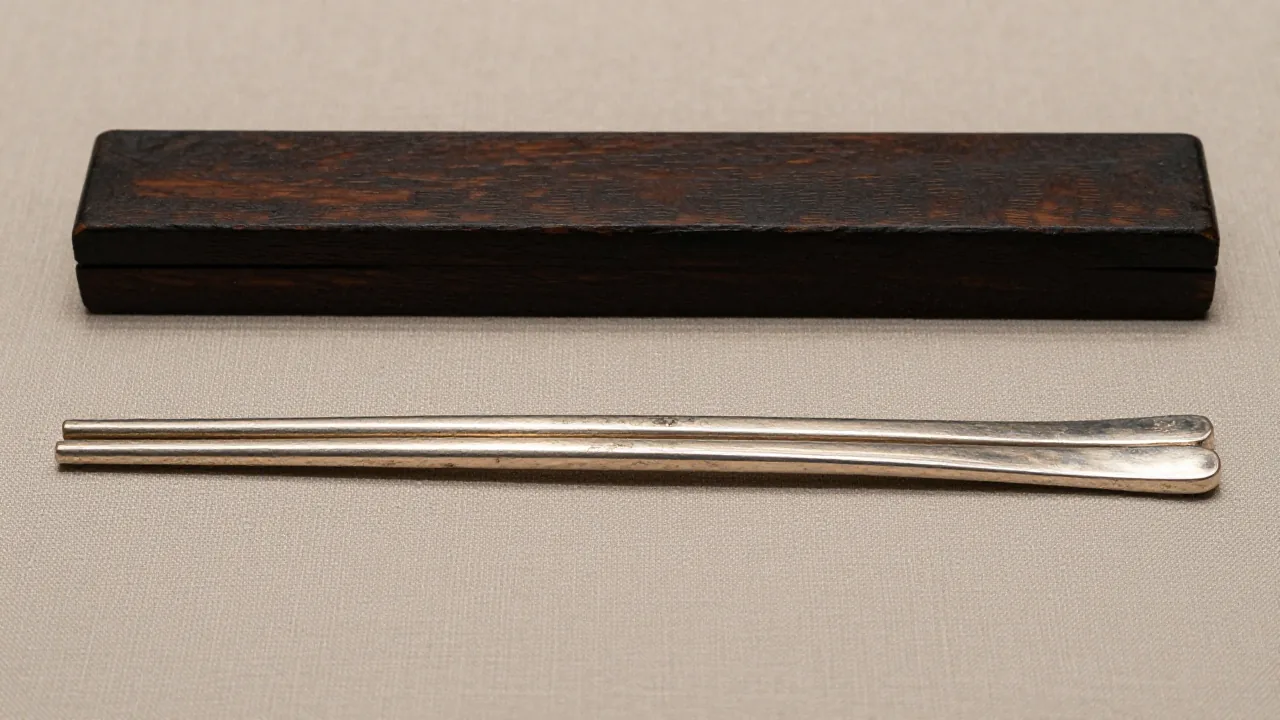
Lay the chopsticks on a clean neutral surface and photograph both together from above. Add separate views of the front, back, tips, upper ends, and side profile. If there is a case, knife, spoon, pricker, or other implement, keep the group together in the record. A fitted set can contain several materials and techniques even when casual inspection reduces everything to “silver chopsticks.”
Museum catalog records demonstrate the value of separating object type, materials, dimensions, acquisition history, and registration details. A documented pair may combine ivory, silver-gilt mounts, a fitted case, and companion implements. That vocabulary is useful, but one cataloged object does not imply that another pair with a similar color or case has the same composition or history.
Assign a temporary object name that stays honest: “pair of metal chopsticks,” “silver-colored chopsticks with case,” or “two decorated chopstick-like implements.” Then note whether the two pieces truly match in length, decoration, wear, and construction. A mismatched pair may have been assembled later. That possibility is worth recording without turning it into a conclusion.
Separate material evidence from marks and surface clues
Photograph every stamped, engraved, cast, scratched, or applied mark with a scale placed nearby, not over the object. Capture one image in even light and another in raking light. Transcribe only characters you can actually see. If a mark is partial, write brackets or “unclear” rather than completing a familiar name from memory.
A hallmark, workshop name, fineness number, owner’s inscription, inventory number, and later dealer label answer different questions. A recognizable word may identify a retailer rather than the maker. A number may be a stock code rather than a purity mark. A Chinese character may be a family name, auspicious motif, workshop, or later dedication. Context comes from mark form, location, construction, documented comparison, and provenance together.
Avoid online acid tests, scraping, filing, or magnets as a complete identification method. Some tests damage surfaces; others answer only a narrow material question and are easy to misread on plated, composite, repaired, or coated objects. A conservator or qualified metal specialist can recommend an examination appropriate to the object and the decision you need to make.
Record construction and condition in separate passes
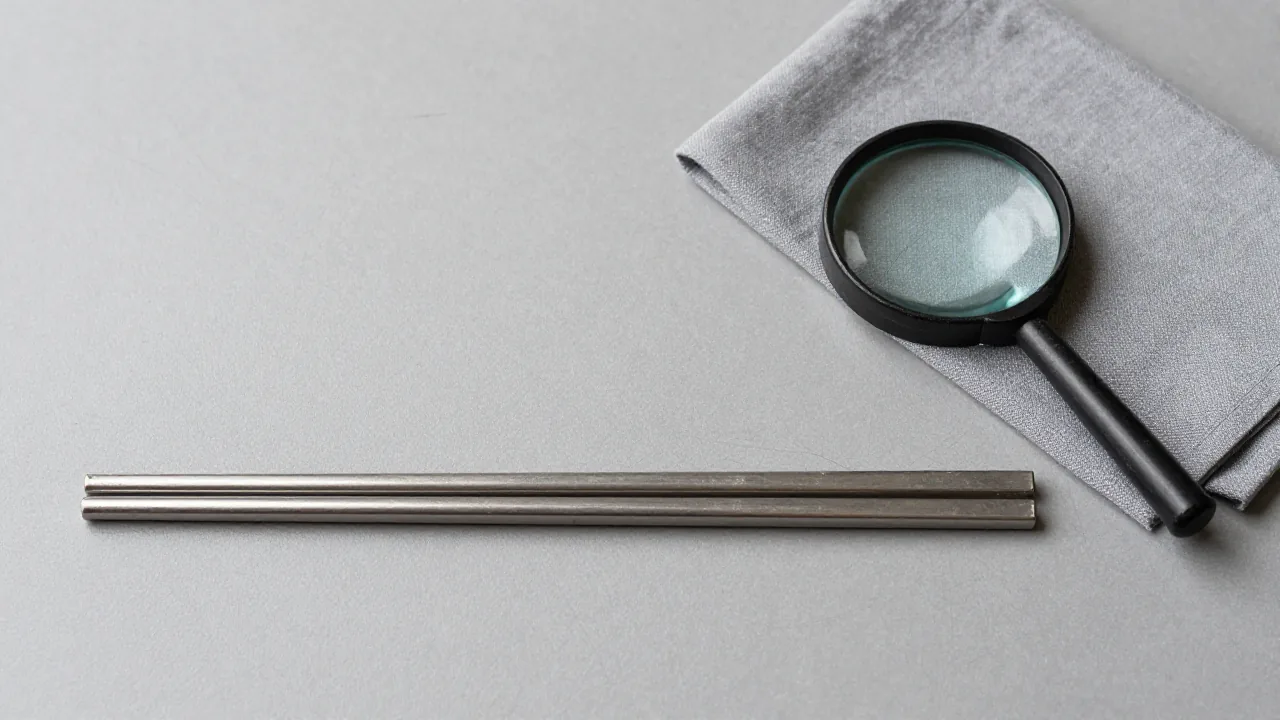
First describe how the pair was made. Look for a continuous cast body, a folded seam, soldered collars, hollow sections, removable caps, wire decoration, gilded zones, inlay, or a different metal at the tip. Use a magnifier without pressing it against the surface. Note where the chopsticks flex, rattle, or feel loose, but do not force a joint to learn how it opens.
Then make a condition map. Tarnish is a surface change, while a dent changes shape; a crack interrupts the material; a loose collar changes structural stability; and a dark line may be decoration, residue, corrosion, or an old repair. Describe location and extent: “dark gray band around both upper collars” is more useful than “badly tarnished.” Record whether the same feature appears on both pieces.
Wear can show how an object was handled, but it is not a clock. Smooth tips may reflect use, polishing, manufacture, or later abrasion. Uneven darkening may reflect storage materials and air exposure. Bright recesses and dull high points can result from a previous cleaning campaign. Treat these patterns as prompts for comparison, not automatic proof of age or authenticity.
Build provenance from small records
Write down what is known about the pair’s custody before family stories become polished into certainty. Who held it? In which city or household was it seen? Was there a box, receipt, auction lot, old photograph, insurance schedule, or handwritten note? Record the speaker and date for oral information. “Grandmother said it came from Shanghai” is evidence of a family account, not yet proof of manufacture in Shanghai.
Keep scans of labels and documents linked to the object record, but store originals according to their own material needs. Search names, addresses, dealer stamps, collection numbers, and auction references independently. A matching motif is weaker evidence than a matching mark, dimensions, construction, and documented chain of ownership.
For a broader look at modern material choices, the [metal chopsticks guide](/guides/metal-chopsticks-guide/) explains why surface finish and construction matter in everyday utensils. The [chopstick materials comparison](/guides/bamboo-vs-wooden-vs-metal-chopsticks/) helps distinguish a historical-object question from a current buying decision.
Separate collection care from food use
An object can be collectible yet unsuitable for eating. Unknown alloys, solder, plated layers, coatings, corrosion products, old polish residue, cracks, porous repairs, and inaccessible hollow spaces all affect the decision. Age or apparent luxury does not establish compliance with modern food-contact standards.
Do not use the pair for a meal merely because it wipes clean. If practical use matters, obtain advice based on material identification, construction, condition, and applicable local rules. Often the least ambiguous choice is to preserve the old pair as an object and use a modern pair with known manufacturer information for food.
Likewise, do not promise that silver itself sterilizes the chopsticks or makes them medically beneficial. Laboratory observations about silver in controlled settings do not convert an unknown historic alloy into a safe consumer product. Keep health and safety claims out of an artifact description unless supported by product-specific and jurisdiction-relevant evidence.
Store the pair before deciding how to clean it
If the surface is stable, remove loose dust only with professional guidance or a very soft clean tool used without pressure. Do not dip, polish, scour, or apply household paste to an unfamiliar object. Polishing removes material, can round marks, disturb gilding, lodge residue in seams, and erase evidence of earlier surfaces. Chemical or galvanic methods introduce additional risks and are not universal shortcuts.
The Smithsonian Museum Conservation Institute entry on historical silver storage and tarnish removal summarizes professional literature that addresses storage, display, tarnish, and the problems associated with abrasive, chemical, and galvanic cleaning. Its museum context is important: a treatment decision follows examination and an objective, not a social-media recipe.
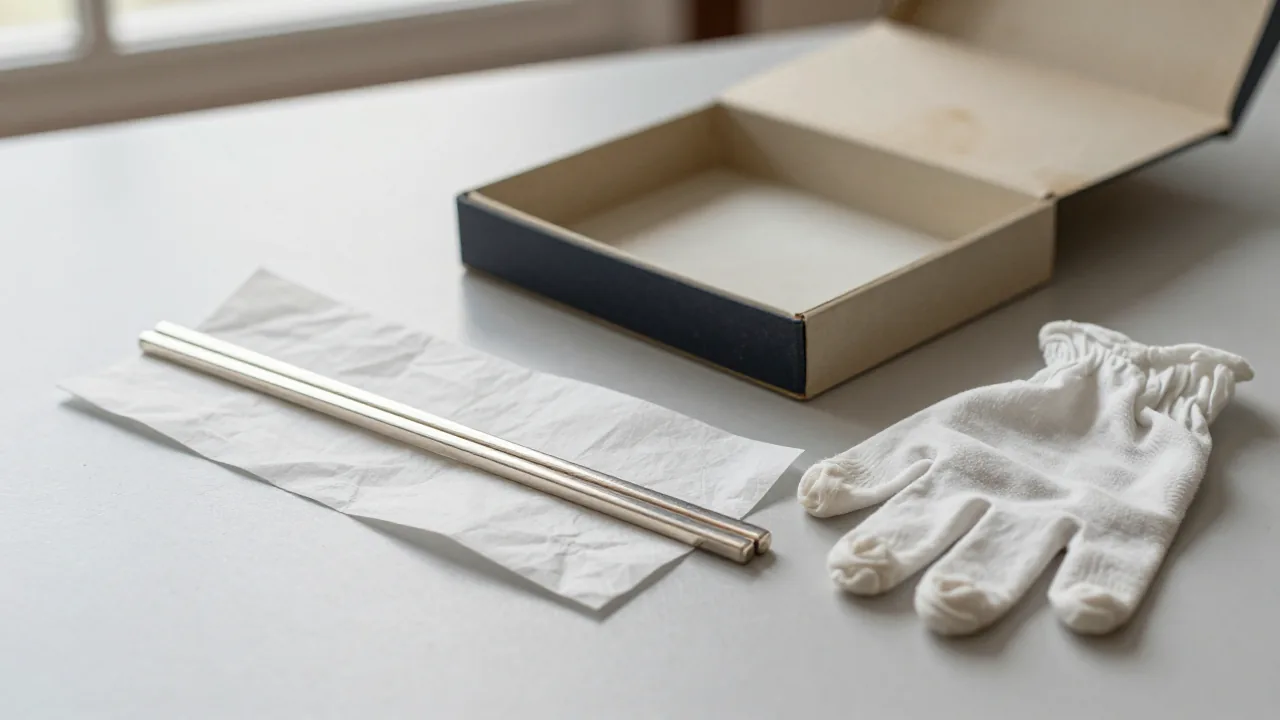
Support the pair so the pieces do not rub. Use clean, inert, acid-free materials appropriate for collections, and keep the storage area dry and stable. Separate the chopsticks from sulfur-emitting materials, unknown foam, rubber bands, food residue, and damp wood. Do not wrap a damp object in plastic. Label the outer container rather than sticking adhesive directly to the chopsticks.
Decide which specialist matches the question
A conservator addresses condition, examination, preventive care, and treatment choices. A curator or specialist dealer may help with typology and comparisons. An assay office or qualified metals analyst addresses composition under a defined method. An appraiser addresses value for a specified purpose and date. One person may hold several qualifications, but the questions remain distinct.
Prepare a compact evidence packet before contacting anyone: whole-object photographs, mark closeups, dimensions, weight, condition notes, provenance documents, and your exact question. “Can you tell me everything?” produces a weaker exchange than “Can you assess whether this collar is plated or gilt without sampling?” or “What examination should precede any tarnish removal?”
Ask what conclusion the method can support, what it cannot support, and whether it changes the object. Keep the written response with the date and professional’s details. If the pair is valuable culturally, financially, or personally, avoid irreversible work until the relevant expertise has been consulted.
A condition-led inspection sequence
- Group: Pair, case, companion utensils, packaging, and documents
- Measure: Length, width, profile, weight, and differences between pieces
- Observe: Marks, seams, joins, decoration, coatings, and material transitions
- Map: Tarnish, scratches, dents, looseness, losses, residue, and repairs
- Trace: Owner, place, date, receipt, photograph, oral account, and gaps
- Protect: Dry support, no rubbing, no adhesive on the object, no experimental polish
- Refer: Match the specialist and examination method to the actual question
Questions about antique silver chopsticks
Does black tarnish prove the chopsticks are silver?
No. Darkening can occur on several metals and finishes, and silver-colored surfaces can be plated, composite, coated, or repaired. Treat tarnish as a condition observation until material evidence is stronger.
Should I polish antique silver chopsticks to reveal the marks?
Not before examining the surface and construction. Polishing removes material and may damage plating, gilding, engraving, inlay, or fragile joins. Photograph marks in angled light and seek conservation advice first.
Can a hallmark identify the maker and date?
Sometimes, but the mark must be read in its full system and object context. Similar symbols, retailer marks, later stamps, and incomplete impressions can mislead. Preserve a precise photograph and verify it with an appropriate reference or specialist.
Are antique silver chopsticks safe to eat with?
Appearance cannot establish food safety. Unknown alloy, solder, coating, corrosion, residue, hollow construction, and repairs all matter. Keep the pair out of food service unless qualified, product-specific assessment supports use.
Does a museum comparison authenticate my pair?
No. Museum records provide vocabulary and documented examples. Authentication requires evidence from the actual object, including construction, marks, provenance, condition, and suitable examination.