 Chopsticks Guide
Black Chopsticks: Material, Finish, and Care Checks
Quick Answer: Black chopsticks are a color choice, not a material category. A pair can be wood with a dark finish or stainless steel sold in a black version. Before choosing one, find three separate details for the exact model: what the stick is made of, how the black surface is described, and how the maker says to wash it. If the listing gives only “black,” you know the appearance but not the answers to the other questions.
Read the material line and the finish line separately
Town Food Service's Black Lacquer Chopsticks are described as wood with a black finish and a red lacquer end. The manufacturer also says that this particular model is not dishwasher safe. By contrast, Yukiwa's tableware catalog includes a black stainless steel chopstick listing. The two examples establish that the color alone cannot identify the body material. They do not establish that all black finishes are made the same way.
If a shop labels a model “black lacquer,” check whether it actually names a coating or uses the phrase as a color name. Don't substitute “natural lacquer” or “ebony” for words the maker did not use. Conversely, if a dark wood is named, that still does not tell you whether the surface is bare, oiled or coated. A listing that names the body and finish separately lets you compare like with like.
Quick Facts
- Body material
- Black is a color, not a statement of wood or steel.
- Finish evidence
- Use the exact product's coating description.
- Use case
- Look at the shape and texture of the eating ends.
- Care risk
- Dishwasher guidance can differ by model and finish.
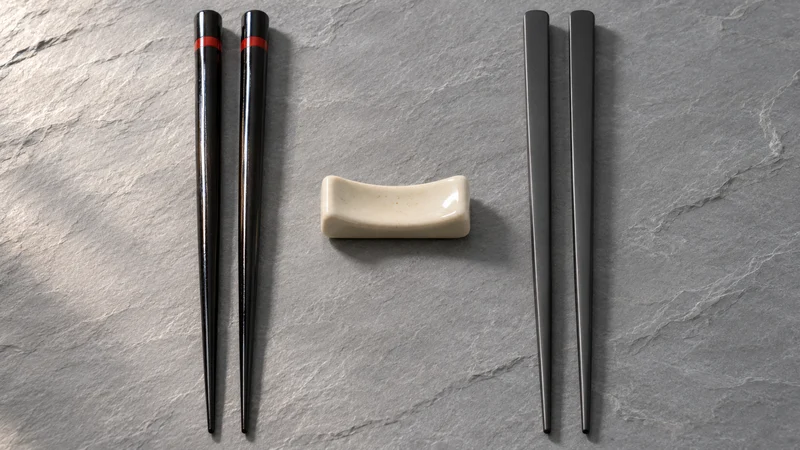
Look at the end that touches the food
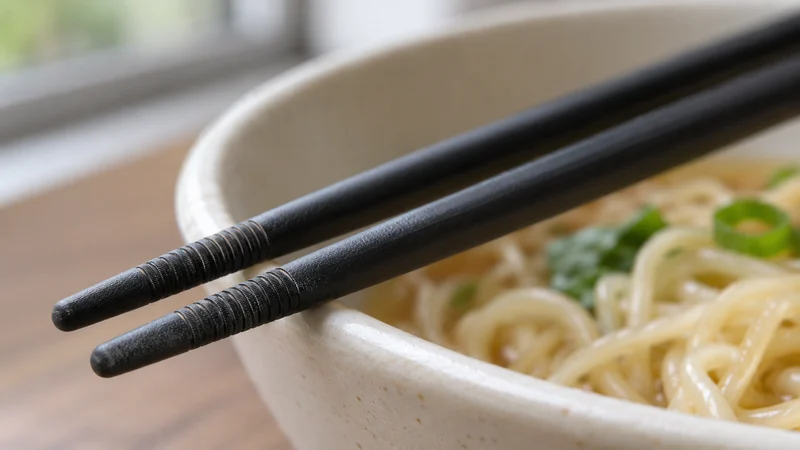
Check the last few centimeters, not just the handle. A profile photo can show whether the tips are pointed or broad. A close-up may show grooves or texture, but a distant glossy photo does not tell you how those tips handle wet noodles. Two pairs may have the same black handles yet differ where you actually grip the food.
For a set you'll share at the table, check that each pair matches in length and tip shape. If you are replacing only one missing stick, black color is not enough to make it a usable match. The bamboo, wood and metal comparison is a better starting point if material and weight matter more than matching a place setting.
Confirm care for the exact variant
Quick Reference
| Listing says | What you still need to check |
|---|---|
| Black wood chopsticks | The finish, washing instructions and any soaking restrictions |
| Black stainless steel chopsticks | Whether the model's finish has separate care instructions |
| Black lacquer color | Whether “lacquer” describes the coating or just the color |
| Dishwasher safe | Whether that statement covers the exact black variant |
Care instructions for an uncoated model do not automatically carry over to a colored version in the same range. If a retailer and the manufacturer disagree, compare model numbers before relying on either. For a second example of how a maker sets its own rules, see Marunao's care instructions. Those instructions describe Marunao's products, not every lacquered pair. The site's lacquered chopsticks guide covers questions to ask about that finish.
Two questions to settle before ordering
Can I tell the material by the shade of black?
No. Matte, shiny and nearly black finishes can appear on different materials. Use the manufacturer's description, not the color of the listing photo.
Does black stainless steel mean dishwasher safe?
Not on its own. Look for care instructions for that model and finish rather than relying on the words “stainless steel.”