 Chopsticks Guide
Where to Buy Chopsticks: Compare Store and Online Options
A six-piece packet and a six-pair packet are not the same purchase. That small distinction can matter more than whether you find them at a neighborhood grocery or on a retailer's website.
Quick Answer: Try a local Asian grocery or kitchenware shop if you want to inspect the packet and buy it on the spot. Buy online if you need a specific model or size that is hard to find locally. Either way, confirm the number of complete pairs, length, material and finish, and the care instructions. Compare the cost per pair only after adding delivery and other charges.
Four details to write down before checkout
- Pairs included
- Complete pairs, not the number of individual sticks.
- Size and model
- Length, SKU, and selected color or finish.
- Material and care
- Material and washing instructions for that item, not a similar listing or a review.
- Price with delivery
- Total payable divided by the number of pairs you can use.
If one of those details is missing, check the package, open the manufacturer's listing, or ask the seller before paying.
Choose a local store when the package can answer your questions
A nearby grocery with a tableware aisle or a kitchenware shop is a useful starting point when you need a set soon. Look for the count printed on the back of the packet. If it has a clear window, you may be able to see whether the tips are tapered and whether there are enough matching pairs. Keep sealed stock closed unless the shop has a sample or gives permission.
Take the length of a pair you already like, not just a picture of it. A packet may look right from the front but contain long cooking chopsticks rather than a set for the table. If you are not sure what to measure, use the chopstick length guide before visiting.
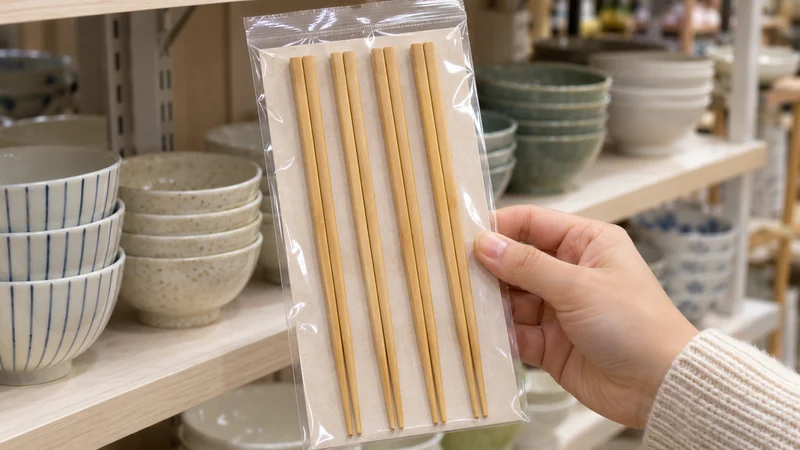
Check the selected variant, not the listing's first photo
An online listing may use one photo across several colors, finishes or pack sizes. Select the option you intend to buy, then check whether the description, pack count and model number still agree. If the photo shows four pairs but the selected option says four pieces, do not assume you are getting four pairs. Ask the seller whether the count refers to individual sticks and how many matched pairs arrive.
Two U.S. listings show which fields are worth checking. IKEA's TREBENT listing, item 903.429.71, describes four pairs, nine inches long, made of bamboo with oil and labeled for hand washing. MUJI's yellow cedar listing describes five pairs, 23 cm long, with a urethane coating. The lengths are nearly the same, but the pack counts and finishes differ. Neither example is a recommendation or evidence that another item from the same seller uses the same finish.
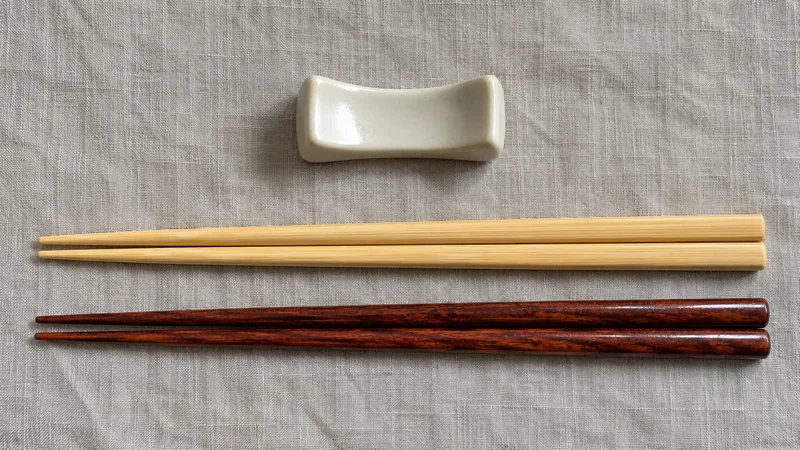
Make the care label a deciding factor
If you only want utensils that can go in your dishwasher, check that the exact product says it is dishwasher safe. A reusable label does not answer that question. If the seller supplies only the wood type or a photograph, treat the care instructions as unknown rather than transferring a rule from another product.
For a shared household, count how many people will eat together and whether you want a spare pair between washes. The guide to choosing a set for home covers that decision separately. A lower price per pair is of little use if half the pack will stay in the drawer.
Compare the delivered cost of equivalent packs
Suppose an online offer lists four pairs for $8, with $5 delivery. Before tax, it is $13, or $3.25 per pair. A local four-pair pack priced at $10 comes to $2.50 per pair before tax and travel. These are hypothetical prices. In your own comparison, use the final checkout total and only compare packs that both meet your length and care requirements.
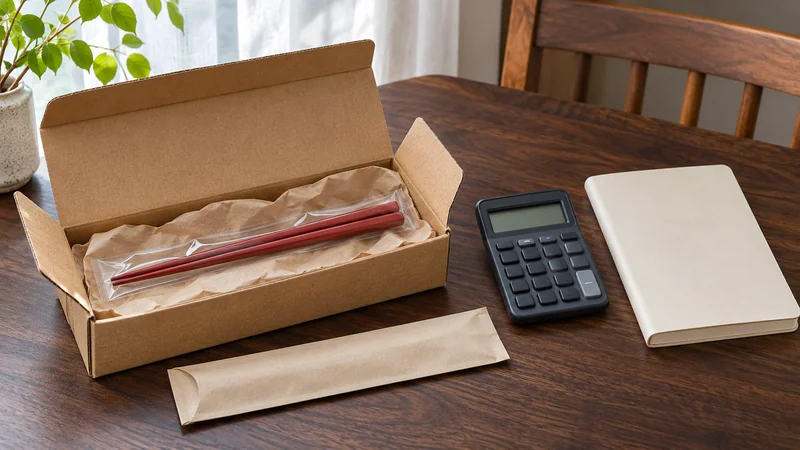
Check who handles returns before opening or washing an order. Read the actual terms for an opened package, return shipping, and any restocking fee. If you order online, retain the confirmation and a copy of the selected listing so you can show which pack you chose if a different one arrives.
Which place should you check first?
| Situation | Start here | Confirm before paying |
|---|---|---|
| Dinner is tonight | Local grocery or kitchenware shop | Stock and number of complete pairs |
| Matching a set | Exact maker or retailer listing | Model, length and finish |
| Shopping across stores | Local price and online checkout total | Cost per pair after charges |
| Care instructions are missing | Manufacturer or seller | Instructions for the selected item |
If you are replacing one lost stick, confirm whether the seller offers singles; a new packet usually solves a different problem.
Questions to ask before buying
Where should I look for chopsticks if I need them today?
Try a local Asian grocery or kitchenware shop. Call ahead if a particular length, finish, or pack size matters.
Does an eight-piece set include eight pairs?
Not necessarily. Eight individual sticks make four pairs if all sticks are intended to be used as matching pairs. Check whether the seller counts pieces or complete pairs.
Can I use the care directions from another listing that looks identical?
Use the directions for the exact item. A different coating, material, or variant can come with different instructions.
How do I compare an online pack with one in a store?
Match the relevant specs and divide the total you would pay by the number of usable pairs. Include shipping and fees, and consider travel for pickup separately.
Product specifications and shopping guidance
- IKEA US: TREBENT specifications
- MUJI USA: yellow cedar chopstick specifications
- FTC: comparison shopping and returns
Product examples are U.S. listings read on November 6, 2026. This guide does not track prices, stock, or return terms for a particular item.