 Chopsticks Guide
Before Buying Ivory Chopsticks: Documents and Legal Checks
Quick Answer: Ivory chopsticks cannot be identified reliably from cream color, age, or a seller's description alone. If you already own or inherit a pale pair, separate three questions: what material it is, whether keeping it is lawful, and whether selling, shipping, importing, or exporting it is allowed. Those questions require different evidence. Preserve any provenance, avoid destructive home tests, and check the current rules for the exact jurisdiction and action before transferring the pair.
Color alone cannot identify ivory chopsticks
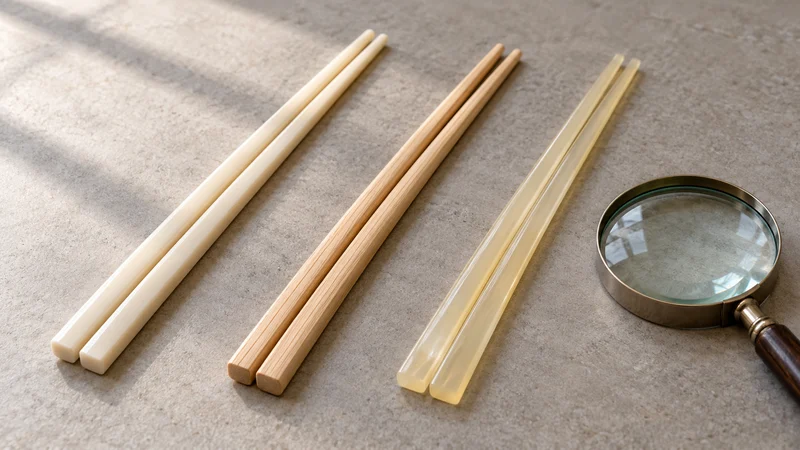
Many materials can produce a smooth pale surface. Bone, resin, celluloid, other plastics, pale wood, mammoth ivory, and elephant ivory can look similar in a small online photograph. Yellowing is not proof of age, and age is not proof of species. A listing that says "ivory" may describe a color rather than a verified animal material.
The CITES Identification Guide for Ivory and Ivory Substitutes explains why online identification is difficult: photos and descriptions may not show enough physical detail. It describes intersecting Schreger lines as a feature associated with elephant and mammoth ivory, especially where a suitable cross-section is visible. That is a useful forensic clue, not a complete do-it-yourself verdict for a finished chopstick.
Do not cut, burn, sand, or apply a hot needle to an inherited pair. Those tests can damage an object, release unpleasant fumes from synthetic material, and still fail to establish species or legal status. A safer sequence is to photograph the whole pair and any case, measure it, record where it came from, and consult a qualified appraiser or wildlife-material specialist if identification matters.
Quick Reference: what common evidence can and cannot establish
| Evidence | What it may tell you | What it does not prove |
|---|---|---|
| Cream or yellow color | The surface appearance | That the material is ivory |
| Seller's label | What the seller claims | Species, age, lawful import, or exemption |
| Family story | A lead about ownership history | A documented manufacturing date or legal chain of custody |
| Detailed physical examination | Material features that deserve expert review | Automatic permission to sell or export |
| Dated receipt, photo, or appraisal | Possible provenance and age evidence | That every transaction is lawful in every place |
Quick facts before identifying or transferring a pair
- Material identification
- Cream color alone does not identify ivory
- Identification risk
- Online images may be insufficient for material identification
- U.S. rule
- Possession and commercial transfer are different legal questions
- Cross-border rule
- International movement can require CITES documents
- Practical alternative
- Wood, bamboo, metal, and verified synthetic materials avoid ivory provenance uncertainty
A pale pair should remain material unknown until evidence supports a narrower conclusion. Keep the case, receipt, dated photographs, appraisal, inheritance record, or correspondence with the item. Do not separate a pair from records that may help establish its history.
The legal question starts with a verb. Keeping, gifting, selling, advertising, shipping across a border, importing, and exporting are different actions. The material's species, the date it was acquired or made, and the place where the action occurs may all matter. A rule for personal possession does not automatically authorize a sale.
For regular dining, there is usually no practical need to resolve that uncertainty by buying an ivory-labelled pair. Bamboo, wood, stainless steel, fiberglass, and clearly identified food-contact synthetics provide usable modern options with clearer care instructions and fewer provenance questions.
Documentation matters before sale, shipment, or appraisal
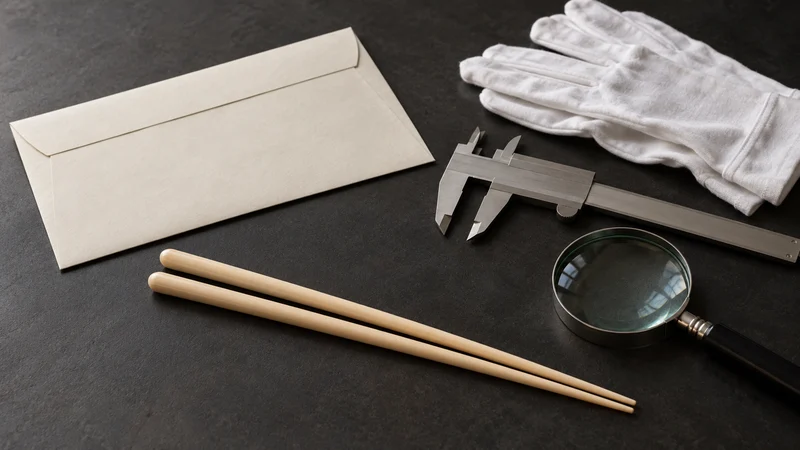
Start with the records you already have. Note who owned the chopsticks, where they were obtained, and approximately when. Photograph the pair from several angles, including the ends and any natural-looking grain, but do not assume that a photograph alone can identify the material. Save images of the case and any maker mark separately.
An appraisal should state what was examined, the basis for the material opinion, and any limits. A value estimate is not the same as a species identification or a legal authorization. Likewise, an auction description that calls an item "antique ivory" is still a claim that needs evidence.
The U.S. Fish and Wildlife Service ivory FAQ repeatedly emphasizes documentation. It notes that dated photographs, dated letters, CITES documents, qualified appraisals, and provenance can matter in different contexts. The agency also warns that state rules may be more restrictive than the federal baseline.
Use this compact record before asking an appraiser or authority for help:
- Photograph the pair, case, ends, surface, and any mark.
- Record dimensions without altering the object.
- Preserve receipts, inheritance documents, dated photographs, and correspondence.
- Write down the intended action: keep, donate, sell, ship, import, or export.
- Identify every relevant jurisdiction before relying on a general online answer.
This sequence does not certify the chopsticks. It makes the next professional or regulatory question specific enough to answer.
Trade rules depend on the action and jurisdiction
In the United States, federal guidance distinguishes personal possession from commercial activity. The Fish and Wildlife Service says federal wildlife laws do not prohibit possession or display of lawfully acquired ivory, but commercial import of African elephant ivory is prohibited and interstate sales are generally prohibited unless a narrow exception applies. Asian elephant ivory has its own rules. State laws can impose additional restrictions.
Cross-border movement raises separate CITES and customs questions. A family heirloom that can remain in a home is not automatically eligible to travel, be mailed abroad, or be sold. Before any transaction, use the current agency guidance and contact the relevant wildlife authority rather than relying on a marketplace listing.
The UK provides another example of why location matters. Its official guidance on dealing in ivory defines dealing broadly and requires an applicable registration or exemption for covered ivory transactions. Simply owning an item without dealing in it is treated differently. That UK rule should not be copied onto a U.S. item, and a U.S. answer should not be copied onto a UK transaction.
The practical rule is therefore narrow: do not advertise, sell, swap, or ship an ivory-labelled pair until both the material evidence and the rules for that exact action are checked. This guide is educational, not an appraisal or legal opinion.
Choose a practical modern alternative for regular meals
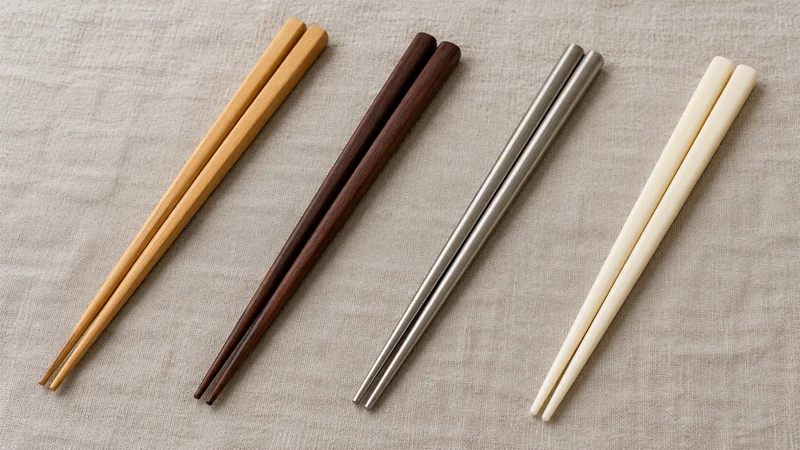
If the goal is daily use rather than conserving an inherited object, compare modern materials by grip, cleaning, heat transfer, weight, and durability. The site's bamboo, wood, and metal comparison explains those tradeoffs without treating one material as universally best.
Bamboo and unfinished wood often provide more surface grip, although they need complete drying and replacement when they split or develop rough damage. Stainless steel can be durable and easy to clean, but a smooth pair may feel slippery; the metal chopstick guide explains grip and heat considerations.
Resin and fiberglass pairs vary by manufacturer, so check the actual material and care instructions rather than assuming every pale synthetic pair is the same. For any eating utensil, an attractive ivory-like color is a design choice, not a reason to accept an unclear material claim.
An inherited pair with uncertain material may be better treated as an object to document and store until its status is understood. A separate, clearly identified modern pair can handle meals without exposing the heirloom to washing, heat, breakage, or legal uncertainty.
Questions about ivory chopsticks
Can I tell whether chopsticks are ivory from a photograph?
Usually not with confidence. Photographs may omit cross-sections, surface structure, scale, and provenance. Use a qualified material examination when the answer affects value, conservation, sale, or travel.
Is it legal to own old ivory chopsticks in the United States?
Federal guidance says possession or display of lawfully acquired ivory is generally different from commercial trade. The item's species, history, and state law still matter, so this is not a conclusion about a specific pair.
Can ivory chopsticks be sold across U.S. state lines?
U.S. federal rules generally prohibit interstate elephant-ivory sales unless a specific exception is met. Do not assume age or an antique label qualifies the item; check current Fish and Wildlife Service guidance and applicable state law.
Does an antique label prove that ivory chopsticks can be traded?
No. A label does not establish species, age, lawful import, provenance, or an exemption. Those points require evidence under the rules that apply to the transaction.
What materials can replace ivory for regular dining?
Bamboo, wood, stainless steel, fiberglass, and verified food-contact synthetics are practical options. Choose by grip, cleaning instructions, weight, heat behavior, and the condition of the actual pair.
The safest answer is not to guess. Treat pale chopsticks as unidentified until evidence supports the material, preserve their history, and check the rules for the specific action before any transfer. For meals, use a clearly identified modern pair and keep an uncertain heirloom out of routine washing and wear.