 Chopsticks Guide
Plastic Chopsticks: Material, Heat, Care, and Replacement Checks
Use product-specific checks to separate appearance from material claims, match the pair to the meal, and spot wear before reuse.
Quick Answer: Plastic chopsticks can be practical reusable tableware, but the word "plastic" does not identify one resin, one temperature limit, or one cleaning method. Check that the exact product is intended for food contact, follow its stated heat and dishwasher limits, and replace a pair that becomes warped, cracked, rough, chipped, or deeply scored.
Plastic chopsticks at a glance
- Material
- Plastic is a broad category; use the maker's construction and care information for the exact pair
- Heat
- Food contact does not automatically mean cooking, boiling-water, microwave, or unrestricted dishwasher use
- Grip
- Tip texture, cross-section, weight, and stiffness affect control more than the category name alone
- Surface
- A reusable utensil should remain intact, smooth, and easy to clean under its intended conditions
- Care
- Follow the label instead of assuming all plastic chopsticks share one washing method
- Replace
- Retire warped, cracked, chipped, sticky, rough, or deeply scored pairs
Start with the product claim, not the color or finish
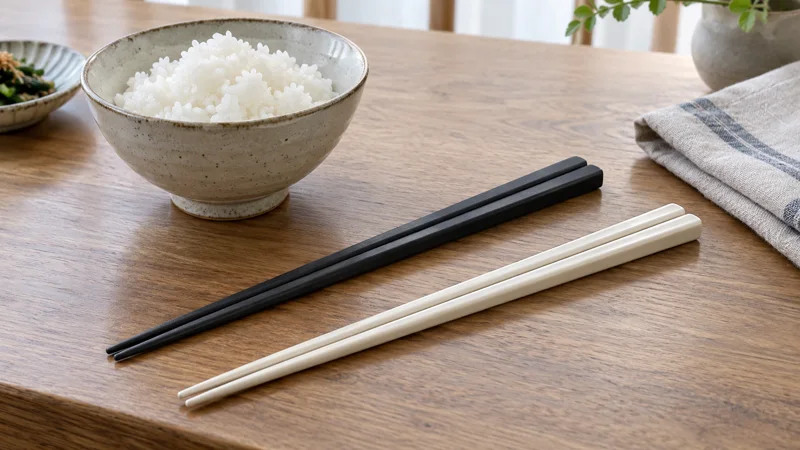
Plastic chopsticks are sold in glossy, matte, translucent, patterned, and wood-look finishes. None of those appearances tells you the precise resin, additives, heat tolerance, or intended use. Two pairs that look similar may have different instructions because their formulations, thicknesses, coatings, decorations, or manufacturing methods differ.
Before buying, look for a traceable maker or importer, an intended food-use statement, material information, and care instructions. If the listing says only "plastic" without explaining whether the pair is reusable tableware or disposable serviceware, do not fill the gap with assumptions. A food-contact claim should relate to the actual product and its intended conditions of use.
The FDA explains that food-contact authorizations are tied to the substance, manufacturer, specifications, and conditions of use. That does not certify any chopstick pair on this page. It supports a narrower buying rule: judge the exact product, not a broad material word.
Decide whether plastic fits the way you eat
A plastic pair may suit a lunch kit, family table, or casual meal when it has a comfortable shape and clear care limits. Weight is usually modest, and molded texture can make the tips easier to control than a polished surface. On the other hand, very flexible shafts may make precise pickup harder, while smooth round handles can rotate in the fingers.
Test the geometry if you can. Close the tips several times and check whether they meet evenly. Notice whether the lower chopstick stays stable and whether the upper one moves without the shafts crossing. For noodles or slippery vegetables, textured tips may matter more than decorative color. For larger foods, adequate stiffness and aligned tips matter more than a sharply pointed end.
Plastic is not automatically better or worse than bamboo, wood, or metal. The useful question is whether the documented pair fits your meal temperature, grip, cleaning routine, and storage habits.
Keep dining use separate from high-heat use
Chopsticks used at the table may touch warm food, but that is not the same as stirring a hot pan, resting across a boiling pot, or leaving the tips in very hot oil. Do not promote ordinary plastic dining chopsticks to cooking tools unless the maker explicitly supports that use.
The FDA's food-contact framework distinguishes conditions such as room-temperature use, hot filling, boiling-water treatment, and cooking above 250 degrees Fahrenheit. Those categories illustrate why "food contact" and "any heat" are not interchangeable. The appropriate limit for a specific pair must come from its manufacturer or applicable product documentation.
The same caution applies to dishwashers. A label may allow dishwasher cleaning but restrict rack position or temperature. Another pair may require hand washing because of decoration, bonding, finish, or resin limits. If the instructions are missing, hand washing with mild soap and comfortably warm water is the conservative choice; it is not a substitute for product-specific guidance.
Inspect wear before another meal
The FDA Food Code says materials used for utensils should be durable, smooth, easily cleanable, and resistant under normal use to problems such as chipping, scratching, scoring, distortion, and decomposition. The Food Code is a model for retail and food-service regulation, not a home certification for a particular pair, but its surface criteria provide a useful inspection lens.
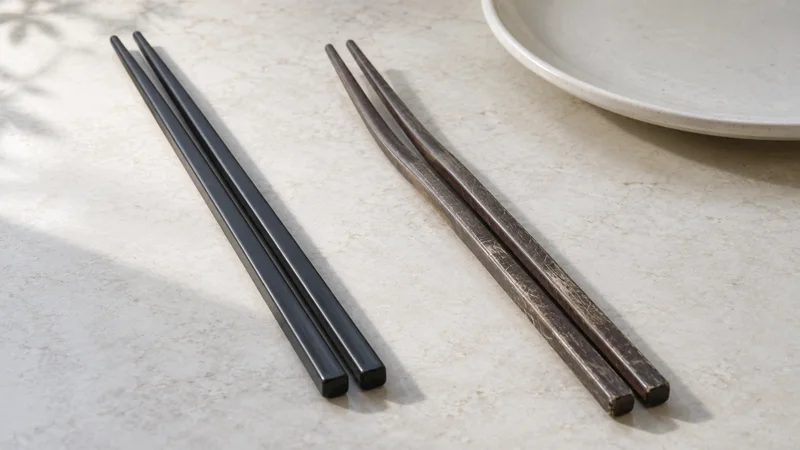
Hold the two chopsticks together under clear light. Look for bending, a changed tip shape, cracks near the ends, flaking decoration, rough seams, sticky patches, or deep grooves. Compare the pair side by side: a heat-warped shaft may no longer align with its mate even if the color looks normal.
Light cosmetic marks are not the same as a structural defect. The practical boundary is whether the pair remains intact, smooth enough to clean, correctly shaped, and consistent with the maker's instructions. If you cannot clean a damaged groove or identify a sticky or degraded surface, replacement is simpler than experimenting with sanding, reheating, or coating the utensil.
Wash, dry, and store without creating new damage
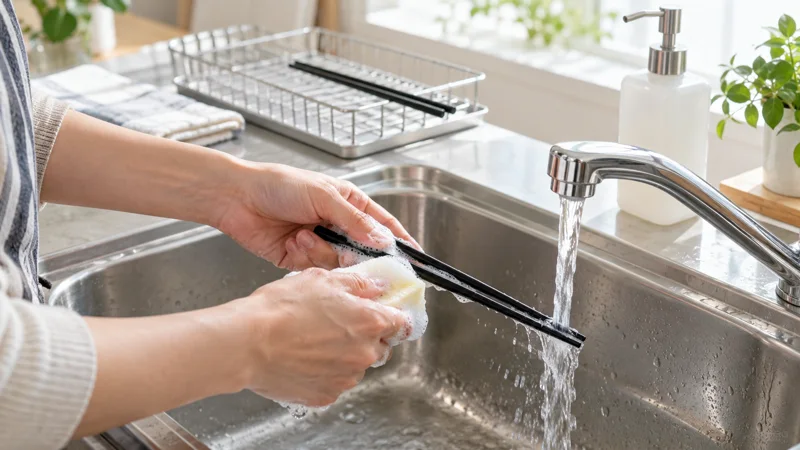
Follow the label first. For hand washing, use mild dishwashing liquid and a soft sponge, rinse both sticks, and dry them before storage. Avoid abrasive pads unless the maker specifically allows them, because aggressive scrubbing can turn a smooth finish into a scored surface.
If the pair is dishwasher safe, place it where it cannot fall onto a heating element or become trapped in moving parts. Use any rack and temperature guidance supplied with the product. Do not assume that a dishwasher-safe pair is also suitable for microwave use, boiling-water sterilization, or cooking.
Store clean chopsticks in a dry, stable compartment rather than loose beside heavy knives or metal tools. A divided drawer, ventilated case, or upright holder that is dry inside can reduce scratches and distortion. Before the next meal, check that both tips are clean and the shafts still align.
Compare plastic with wood, bamboo, and metal
Plastic chopsticks may offer consistent molded shapes, low weight, and straightforward washing when the product is designed for reuse. Their limits are product-specific heat tolerance, possible flex, and the need to watch for warping or surface wear.
Wood and bamboo often provide more natural surface grip, but their finish and moisture care vary. Metal resists many impact and moisture problems, yet smooth metal can feel slippery and some users dislike the weight or temperature feel. Fiberglass-reinforced resin is another category frequently marketed as durable, but it still needs exact material, food-contact, and care information rather than being treated as interchangeable with every plastic pair.
Choose by documented construction and actual use. For a beginner, tip grip and balance may matter most. For a lunch kit, portability and a ventilated case may matter. For hot cooking, use purpose-made cooking chopsticks with a stated temperature range instead of relying on a dining pair's appearance.
Six checks before reuse
- Confirm: verify that the pair is intended for food contact and identify the maker.
- Read: use the material, heat, dishwasher, and use instructions for that exact product.
- Handle: check tip alignment, stiffness, surface texture, and comfortable length.
- Separate: keep dining chopsticks away from unsupported cooking temperatures.
- Clean: wash by an allowed method, then dry before storage.
- Replace: retire warped, cracked, chipped, sticky, rough, or deeply scored pairs.
Questions about plastic chopsticks
Are plastic chopsticks safe to use?
They can be suitable tableware when the exact product is intended for food contact, used within its stated conditions, kept clean, and still in good condition. The word plastic alone does not prove those points.
Can plastic chopsticks go in the dishwasher?
Only if the maker labels that pair dishwasher safe. Follow any rack and temperature instructions because resin, decoration, coating, and construction can change the limit.
Can I cook with plastic chopsticks?
Do not use ordinary plastic dining chopsticks for cooking unless the manufacturer explicitly gives a suitable temperature range and cooking use. Warm table food and sustained pan heat are different conditions.
When should plastic chopsticks be replaced?
Replace them when they warp, crack, chip, become sticky or rough, lose tip alignment, or develop deep scoring that makes cleaning unreliable.
Are plastic chopsticks better than wooden or metal chopsticks?
No material is universally best. Plastic may be light and consistently shaped; wood can offer more grip; metal can resist moisture and impact. Compare the exact pair's grip, care, heat limits, and intended use.
Sources and related guides
The FDA Food Code 2026 provides the utensil-surface criteria used for the wear inspection. The FDA pages on food-contact conditions of use and regulatory status of food-contact materials explain why material authorization and temperature conditions are product-specific.
For other materials and care routines, see the chopstick material comparison, metal chopsticks guide, reusable chopsticks guide, and care and cleaning guide.