 Chopsticks Guide
Ebony Chopsticks: Check the Wood, Finish, and Care Instructions
A dark, polished pair can look convincing in a listing while leaving the important questions unanswered. What wood is declared, what touches the food, and how does its maker say to wash it?
Quick Answer: Ebony chopsticks are wooden eating utensils sold with an ebony material description. Choose by the maker's declared wood, surface treatment, tip shape and written care directions, not black color alone. A photograph cannot authenticate the species, confirm an unknown coating or establish that a pair is dishwasher-safe.
Material and surface facts to confirm
- Material identity
- Ask for the declared wood and, when supplied, its botanical name.
- Species example
- Kew accepts Diospyros ebenum; this does not identify an unknown pair.
- Documented product
- The Tsubamesanjo center lists Marunao ebony chopstick models.
- Surface attribute
- Record the stated coating or uncoated finish separately from the wood.
- Care source
- Use directions for the exact maker and product.
- Image limitation
- All three scenes are unbranded illustrations, not authenticated ebony samples.
No pair was independently tested for species, food-contact compliance, weight or durability for this article.
Ebony is a material claim, not a color test
An ebony label should tell you something about the wood, but it is not a complete specification. Ask which wood the maker uses and whether the description refers to the whole shaft, an inset, a handle component or simply a dark finish. A seller who provides only ‘black wood’ has not answered the same question as a seller who names the material and construction.
Kew's Plants of the World Online accepts Diospyros ebenum and records its native distribution in southern India, Sri Lanka and the Andaman and Nicobar islands. That is botanical information about a species. It does not establish that every object described as ebony comes from that species, or that an unlabeled pair has a particular geographic origin.
Color and visible grain can help you describe what is in front of you, not certify its identity. Do not scratch, burn, soak or cut a food utensil to run an improvised identification test. If species or sourcing matters to your purchase, request written information from the maker rather than treating a dark photograph as proof.
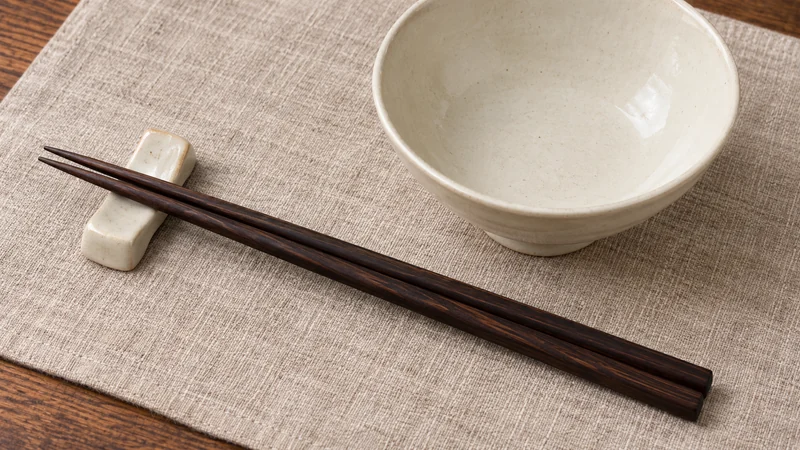
Read the finish separately from the wood
The food-contact surface may be bare wood, an oil-treated surface, lacquer or another declared coating. ‘Ebony’ alone does not resolve that distinction. Ask what finish is applied, whether the pair is intended for repeated eating use, and whether the care instructions cover that exact construction.
A documented example is more useful than a generic luxury description. The Tsubamesanjo Regional Industries Promotion Center's Marunao listing names eight-sided and sixteen-sided premium ebony models. This confirms that ebony chopsticks are a real product category, but it does not supply the finish, dimensions or performance of every pair using the word ebony.
For a pair already at home, inspect the surface under good light. A loose coating edge, splinter or crack needs attention regardless of how expensive the wood was. Do not conceal damage with household paint or glue. Where the finish or intended food use cannot be established, asking the maker or choosing a clearly documented alternative is preferable to experimental refinishing.
Tip alignment and handling deserve a closer look
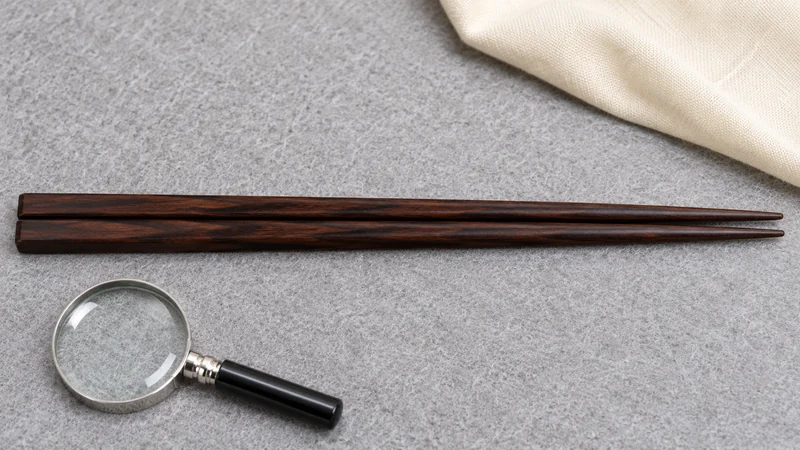
Look at both sticks together. Their tips should meet without forcing the shafts to twist, and the taper should be even enough for the eating task. A faceted handle, fine point and polished finish are separate features; none is automatically the right combination for every hand or meal.
If a shop allows handling, compare the pair's length and balance with utensils you already use. Check whether the shafts rotate in your fingers and whether opening the upper stick feels comfortable. These are personal handling observations, not a claim that this article has measured grip strength or found a universally superior wood.
Online, ask for a full-length view and a clear tip close-up rather than relying on a dramatic dark-background photograph. Written dimensions and a return policy can resolve questions a picture cannot. The Japanese wooden chopstick guide gives broader context for shaft shape, finish and intended use without treating Japanese style as a single wood specification.
Follow the maker from washing through drying
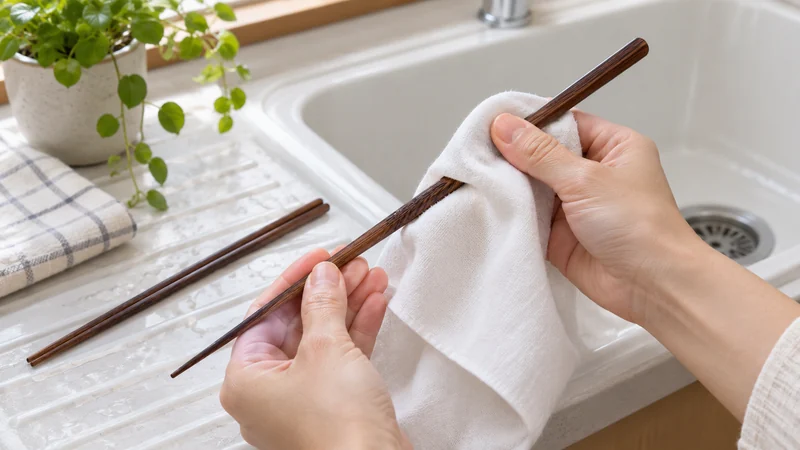
Marunao's own care instructions tell owners to wipe moisture promptly and avoid dishwashers, drying machines, microwaves and ovens. They also warn against excessive force and say to stop using damaged or deformed utensils. Apply those instructions to the products they cover, not automatically to every item sold as ebony.
The same page discusses restoring diminished luster with vegetable oil, including olive oil. That is manufacturer-specific advice, not a reason to oil every lacquered or otherwise coated pair. First identify the surface and follow its maker's directions; do not improvise a treatment based only on the wood name.
Keep the care information with the product, especially if several wooden pairs share a drawer. After cleaning according to those directions, let the pair finish drying before enclosing it in a case. A stable chopstick rest gives the tips a place between bites; it does not replace cleaning or make an unknown finish suitable for use.
Decide whether the documentation fits your routine
For daily use, a well-described pair that suits your grip and washing routine is more useful than an impressive material name with missing care information. If you need machine washing, do not assume ebony meets that requirement. Look for explicit permission for the exact product rather than interpreting a polished surface as heat resistance.
For a gift, include the maker's material and care note instead of adding unsupported claims about rarity, sustainability, antibacterial effects or lifetime durability. Ask about traceable sourcing if it matters to you, but do not infer a legal or certification status from a product photo. This guide does not provide a species authentication or an import-law determination.
Before committing, you should be able to repeat the essentials in plain language: the declared wood, the finish, the purpose and the care method. If those remain unknown after contacting the seller, the uncertainty is part of the buying decision, not something a beautiful black pair can answer.
Quick Reference: listing details and their limits
| Detail | Useful information | Does not prove |
|---|---|---|
| Ebony name | Declared wood and construction | Species from color alone |
| Botanical name | A more specific material claim | Authentication of your individual pair |
| Coating | Named surface treatment and food-use purpose | Dishwasher permission |
| Tip photograph | Alignment and visible condition | Comfort in every hand |
| Maker's directions | Permitted cleaning and maintenance | Care rules for every ebony product |
Use the complete product description and care note together. Illustrations in this article do not certify material identity.
Questions before choosing an ebony pair
Can black color prove chopsticks are ebony?
No. Color and grain in a photograph cannot authenticate wood species. Ask for the maker's declared material and construction.
Are ebony chopsticks always uncoated?
No. The wood name does not identify the surface treatment. Check whether the exact product is uncoated, oil-treated, lacquered or finished another way.
Can ebony chopsticks go in a dishwasher?
Do not assume so. Follow the exact maker's directions; Marunao's cited care page tells owners to avoid dishwashers and drying machines.
Should I oil a pair with an unknown coating?
Do not apply oil simply because the listing says ebony. Identify the finish and obtain the maker's maintenance directions first.
Have the illustrated pairs been authenticated as ebony?
No. The three images are unbranded illustrations of table use, visible inspection and drying, not authenticated species samples or tested products.
Botanical and manufacturer information
- Royal Botanic Gardens, Kew: Diospyros ebenum
- Tsubamesanjo Regional Industries Promotion Center: Marunao wood chopsticks
- Marunao: product care and use precautions
Sources checked November 5, 2026. Kew supplies taxonomy, the regional promotion center supplies a named product example, and Marunao supplies its own care instructions. None authenticates the illustrated utensils.