 Chopsticks Guide
Hashi Chopsticks Meaning: Table Setting and Related Terms
Quick Answer: Hashi is the Japanese word used for chopsticks. It does not name one material, one decorative style, or one special product. Related words add context: a hashi-oki is a chopstick rest, while my-bashi refers to a person's own reusable pair. Exact materials, shapes, and household customs still vary.
Hashi meaning in a Japanese meal
If a menu, shop label, or Japanese culture guide uses hashi, it is referring to chopsticks. Web Japan's overview of Japanese chopsticks introduces chopsticks as hashi and then describes the many forms created for different meals and tasks. The word is a useful label, but it is not a promise that every pair is made in Japan or follows one traditional construction.
Context matters. A pair at a home table may be a person's everyday reusable utensils. A restaurant may provide a wrapped disposable pair. A lunch set may include a compact pair in a case. Cooking chopsticks can be longer than eating chopsticks, and training pairs can include supports. All can be discussed as chopsticks, while the more specific word tells you what the pair is for.
At many Japanese table settings, the pair lies horizontally in front of the diner, often with the tips pointing left. That position differs from common arrangements elsewhere in East Asia. It is a table-setting convention, not a test of whether a meal is authentically Japanese. Look at the actual setting and follow the host or restaurant when practice is unclear.
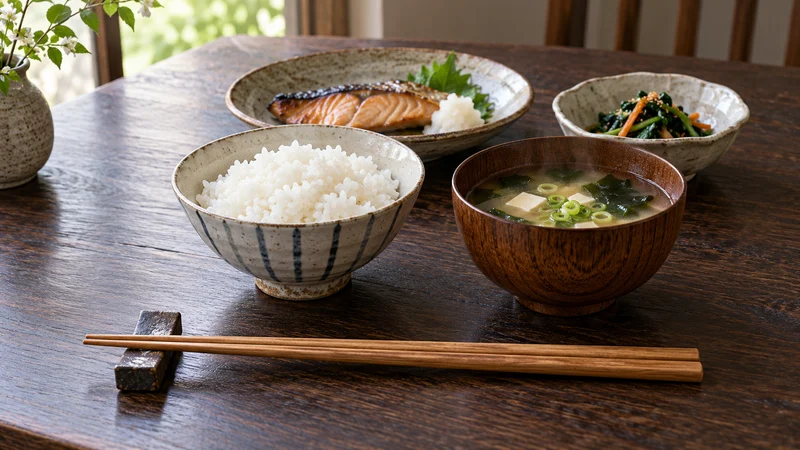
Hashi terms and table-setting facts
- Hashi
- The Japanese word used for chopsticks
- Hashi-oki
- A small rest that keeps chopsticks from rolling and keeps the tips off the table
- My-bashi
- A person's own reusable chopsticks
- Placement
- At many Japanese table settings, chopsticks lie horizontally in front of the diner
- Variation
- Material, tip shape, purpose, and household practice still vary
The quickest way to understand a hashi-related term is to ask whether it names the utensils, an accessory, ownership, or a particular use.
Quick Reference
| Term or clue | Practical meaning | What not to assume |
|---|---|---|
| Hashi | Chopsticks | One material or one decorative style |
| Hashi-oki | A rest for the chopsticks | A storage box or a second pair |
| My-bashi | A person's own reusable pair | One required brand, material, or case |
| Horizontal placement | A common Japanese table arrangement | A universal rule in every home and restaurant |
| Fine or tapered tips | A common feature of many Japanese pairs | Proof of origin by shape alone |
These distinctions prevent a common translation mistake. Hashi chopsticks may be useful as an English search phrase, but the two words are not two different utensils. The first supplies the Japanese term and the second supplies its English meaning.
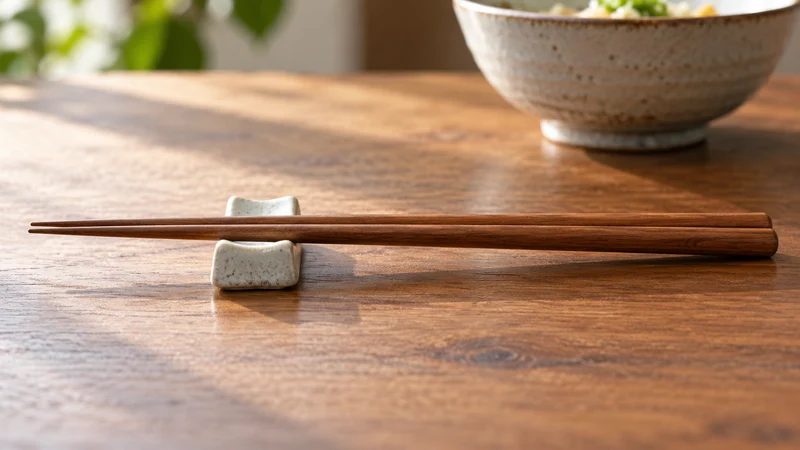
Hashi-oki identifies the rest, not the chopsticks
A hashi-oki is the small rest placed under a pair of chopsticks. It helps prevent rolling and keeps the eating tips from touching the table. The Web Japan Niponica feature on hashi-oki describes the rest as part of Japanese dining presentation as well as a practical table accessory.
The same feature advises placing the pair so about three centimeters extends beyond the rest from the tip end. In other words, the eating tips should project past the support rather than sit directly on top of it. Treat that measurement as the publication's table-setting guidance, not a reason to reject a rest that works safely with a different pair or setting.
Rest shapes range from plain ceramic bars to small seasonal forms. Decoration can contribute to the place setting, but the useful test is simple: the rest should support the pair steadily without forcing the tips onto the table or into food residue.
My-bashi describes personal reusable chopsticks
My-bashi combines the English word “my” with the Japanese term for chopsticks. Web Japan uses it for a person's own reusable pair and notes that individual family members commonly have their own chopsticks. The phrase can also appear in discussions of carrying a personal pair away from home.
The term does not identify a single material. A personal pair may be lacquered wood, unfinished wood, bamboo, metal, or another food-contact material. A travel case can keep a clean pair separate from other items, but the case does not replace washing and drying. Follow the maker's directions for the actual material and let the pair dry before closing it into a case for storage.
For a carried pair, inspect the tips, alignment, surface, and case cleanliness before use. Replace a damaged pair when cracks, splinters, lifting coating, or deformation make it difficult to clean or control.
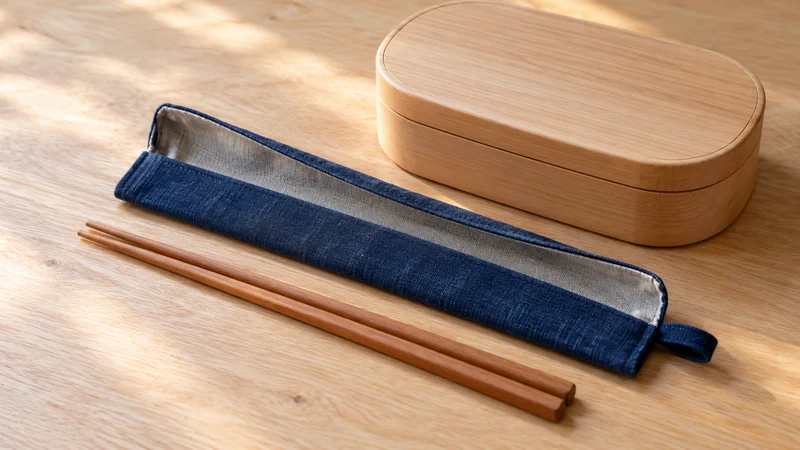
Material and shape do not change the basic word
Web Japan's Chopsticks in Japan summary describes many Japanese pairs as wood coated with synthetic resin or lacquer and notes their tapered tips. Its longer feature also shows task-specific forms for noodles, fermented soybeans, training, and travel. Those examples demonstrate variety; they do not turn hashi into the name of one finish.
When choosing a pair, move from language to object checks. Read the stated base material and coating. Confirm whether the pair is intended for eating, cooking, training, or display. Check length, tip texture, balance, and care directions. A glossy surface may be lacquer, resin, paint, or another coating, so do not identify it from a photograph alone.
For a focused material comparison, use the Japanese wooden chopsticks guide rather than assuming the word hashi settles the question. The Japanese term tells you what the utensil is; the product information tells you what it is made from and how it should be cared for.
Read the setting without turning etiquette into a universal rule
Table etiquette is easiest to follow when you observe the meal in front of you. Use the provided rest when one is present. Keep the tips off the table. Avoid pointing with the pair, moving dishes with it, or leaving the chopsticks stuck upright in food. When a host supplies a specific arrangement, follow it rather than rearranging everything to match a diagram.
Language also changes with context. A product listing might use hashi simply because it is written for Japanese readers. A souvenir description may emphasize craft and decoration. A restaurant note may focus on placement or handling. Translate the practical meaning first, then use the surrounding words to identify the specific object or action.
This bounded approach keeps the explanation accurate: hashi means chopsticks, while compounds and context explain the rest of the scene.
Questions about hashi chopsticks
Does hashi mean chopsticks?
Yes. Hashi is the Japanese word used for chopsticks. The word alone does not specify the material, finish, length, or intended task.
What is a hashi-oki?
A hashi-oki is a chopstick rest. It supports the pair, helps prevent rolling, and keeps the eating tips from touching the table.
What does my-bashi mean?
My-bashi refers to a person's own reusable chopsticks. The pair may be used at home or carried in a case, depending on the owner's routine.
Are all hashi made from wood?
No. Japanese chopsticks are available in wood, bamboo, metal, synthetic materials, and coated combinations. Check the actual product description and care instructions.
Must Japanese chopsticks always be placed horizontally?
Horizontal placement in front of the diner is a common Japanese table convention described by Web Japan. Exact practice can vary by setting, so follow the host or restaurant and keep the tips clean and controlled.
The useful takeaway is linguistic and practical: read hashi as chopsticks, then let the compound word, product details, and table setting tell you which chopsticks and which action are meant.