 Chopsticks Guide
How to Eat Soba with Chopsticks: Cold and Hot Noodle Steps
Quick Answer: To eat soba with chopsticks, start with a small, manageable portion. For cold soba served with a dipping cup, lift a few noodles, dip part of them into the sauce, and bring them to your mouth. For hot soba, lift from the broth instead: there is usually no separate dipping step. Comfortable control matters more than making a slurping sound.
Identify the tray, cup, or soup bowl first
Look at the meal before moving the chopsticks. A tray of chilled noodles with a small cup suggests a dipping setup; a bowl with noodles already submerged calls for a different movement. A small sauce cup is not interchangeable with a bowl of hot broth.
Japan Airlines' soba guide describes cold noodles served on a wicker basket with dipping broth. That is the setting for the cold-soba sequence below, not a rule for every regional preparation.
Quick Reference: Match the movement to the serving
Swipe or scroll horizontally to see all columns.
| What arrives | First action | Avoid assuming |
|---|---|---|
| Cold noodles and a separate cup | Take a small portion and try a partial dip | The cup must be emptied onto the tray |
| Noodles already in hot broth | Lift a manageable bite from the bowl | A second dipping sauce is missing |
| A regional dish with sauce already added | Follow its serving arrangement | Every cold soba dish follows the same pattern |
If you are unsure which vessel contains sauce, ask before pouring. This is easier than trying to reverse a whole-cup addition. You do not need to memorize Japanese utensil names to make that useful distinction.
Quick Facts
- Cold setup
- Noodle tray and separate dipping cup
- Hot setup
- Noodles already in broth
- First portion
- Small enough to control
- Dipping method
- Try part of the portion before adding more sauce
- Sobayu
- Cooking water sometimes offered after cold soba
- Dietary check
- Ask about noodles, sauce and preparation
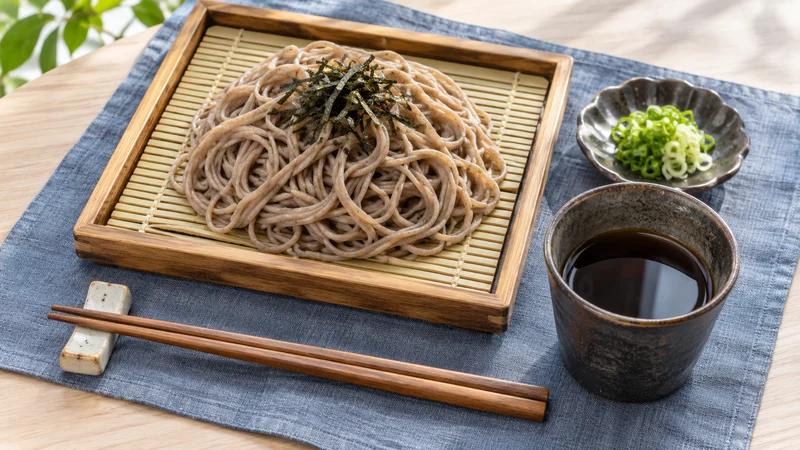
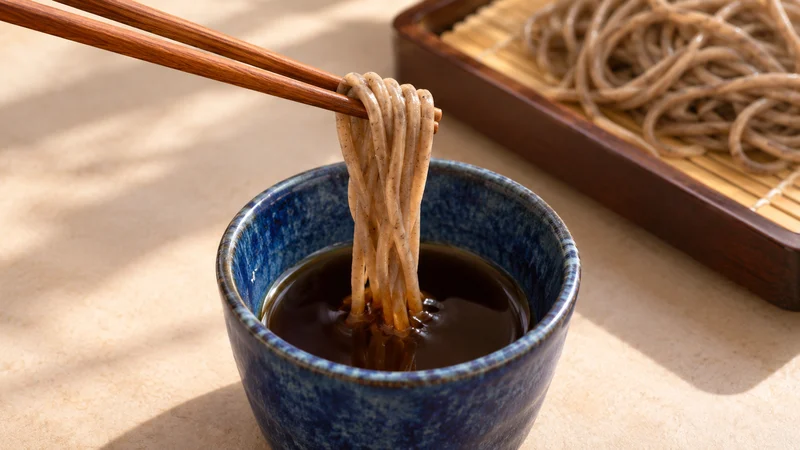
Cold soba: a small lift, a short dip, then a bite
The restaurant Ukiya's eating guide recommends a bite-sized portion and dipping only part of the noodles at first. It does not demand an exact submerged fraction. Treat that as a flavor adjustment rather than a precision test.
- Open the tips over a small patch near the top of the noodle pile. Close them around a portion you can hold without squeezing hard.
- Lift enough to separate that portion. If a much larger tangle comes with it, lower it back onto the tray and start with less.
- Move the small bundle toward the cup. Let some of its hanging ends enter the sauce while keeping the chopstick tips clear of the rim.
- Bring the portion to your mouth at a comfortable height. Do not stretch your arm high just to produce a dramatic noodle lift.
The movement suggestions are beginner-oriented editorial guidance, not a claim that one exact wrist angle is traditional. A shallow first dip also lets you judge the sauce before committing the whole bite. Leave room to change the next attempt.
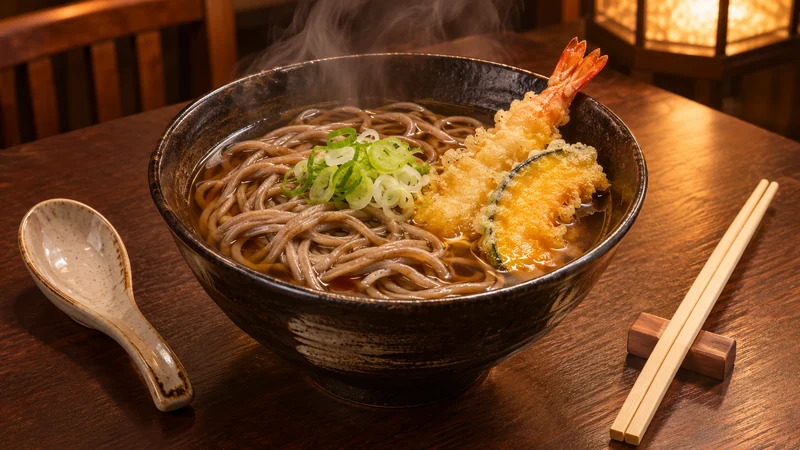
Hot soba changes the dipping step
With hot soba, the noodles are already in broth. You can take a small bundle directly from the bowl, pause if it is too hot, and eat when comfortable. Take care not to drag a long wet strand across your clothing or another diner's place.
Do not infer that a separate cup is required just because a cold-soba photograph shows one. Conversely, a spoon alongside a hot bowl does not need to carry the entire noodle portion. Use it for broth or support if useful, and ask the restaurant about unfamiliar serving pieces.
This page concerns eating rather than cooking. Long cooking utensils are a different choice from the pair at your place setting. The site's hashi terminology guide distinguishes table-setting terms; it is not a soba recipe or restaurant-specific etiquette authority.
If the noodles slip, shorten the next attempt
Change one thing at a time. First reduce the bundle, rather than gripping harder and lifting higher together. A portion that repeatedly falls before reaching the cup is a reason to return to the tray, not to chase it across the table.
Keep the cup in a stable position during an early attempt. Move slowly enough to notice whether the bundle is balanced between the tips. If the ends trail into nearby dishes, take fewer noodles next time instead of trying to gather them midair.
When pausing, set the pair down on the supplied rest if there is one. The chopstick-rest guide provides a table-setting overview. A rest keeps a pause separate from the eating movement; it does not solve a slipping grip by itself.
Sauce, sobayu, and regional exceptions
Not every cold bowl is a dipping tray. Japan's agriculture ministry describes Echizen oroshisoba, including a style in which tsuyu is poured over the noodles and grated daikon is added. That specific example is why a blanket prohibition on pouring sauce would be misleading.
Ukiya also describes sobayu, the cooking water sometimes served after cold soba, which can dilute the remaining dipping sauce. Wait until you know what the vessel contains; it is not another condiment to add automatically at the start.
The useful takeaway is to read the serving arrangement, not to enforce a single ceremony. This guide has not been independently diner-tested. Its illustrations show settings and portions, not a certified grip demonstration.
Questions at a first soba meal
Do I have to slurp soba?
No. Ukiya explains that slurping is accepted but need not be forced. Eat at a pace and temperature you can comfortably manage.
Should I pour the dipping sauce over every cold soba dish?
No. A separate dipping cup and a prepared regional bowl are different arrangements. Check the dish before pouring; the MAFF Echizen example documents variation, not permission to treat all trays identically.
Can I ask for a fork?
Yes. Ukiya notes that diners can ask, although a restaurant may not have one available. Difficulty with chopsticks is not a reason to rush or keep lifting an oversized bundle.
Is soba automatically wheat-free or vegetarian?
No. Check the actual noodles, sauce, toppings, and preparation with staff. Soba may contain wheat, and broth or dipping sauce may include fish ingredients; ingredient and cross-contact questions cannot be answered from the name alone.