 Chopsticks Guide
Iwaibashi Meaning: Japanese Celebration Chopsticks and Their Two Ends
Quick Answer: Iwaibashi are Japanese celebratory chopsticks associated with occasions such as New Year and weddings. The familiar form is pale wood with a fuller middle and tapered tips at both ends. Those two ends have a religious explanation in the cited cultural accounts: one is for the diner and the other for the deity sharing the meal. That symbolism is not an instruction to alternate ends or use a personal pair to serve everyone.
Recognize the double-ended form
Look at a whole stick, not just the exposed tip in a paper sleeve. In the form described here, each stick narrows toward both ends rather than having a broad handle end and one eating tip. The pair is normally already two separate sticks. Do not assume it needs to be snapped apart like a joined disposable pair.
Kikkoman's food-culture glossary describes iwaibashi as festive willow chopsticks with two narrow ends. The English name "double-ended chopsticks" describes that shape; it does not establish the material of an unidentified pair. A photograph of pale wood cannot distinguish willow from another light-colored wood, and a decorative wrapper cannot substitute for the maker's material statement.
Quick Reference
| Term or feature | What it tells you | What it does not establish |
|---|---|---|
| Iwaibashi | Celebratory use | One universal household ritual |
| Ryokuchibashi | A double-ended form discussed in the sources | Permission to use both ends for serving |
| Willow | A material named in the cultural descriptions | The species of every product sold under the name |
| Paper sleeve | Packaging for a pair | Food-contact suitability or a washing rule |
If you are buying a pair for a celebration, ask for a full-length view as well as the wrapper photograph. Confirm whether the listing is for one pair, several guest pairs, or a decorative item. This is a practical purchasing check, not a test of how "authentic" a family's celebration is.
Quick Facts
- Object
- Celebratory Japanese chopsticks, called iwaibashi.
- Described form
- Two separate sticks, each tapered at both ends.
- Occasions
- Sources describe New Year, weddings and okuizome.
- Cultural meaning
- The two ends symbolize people and deities sharing a meal.
- Material reference
- Willow is described in cultural sources; check actual product declarations.
- Guest decision
- Ask which pair is personal and which utensil is for shared dishes.
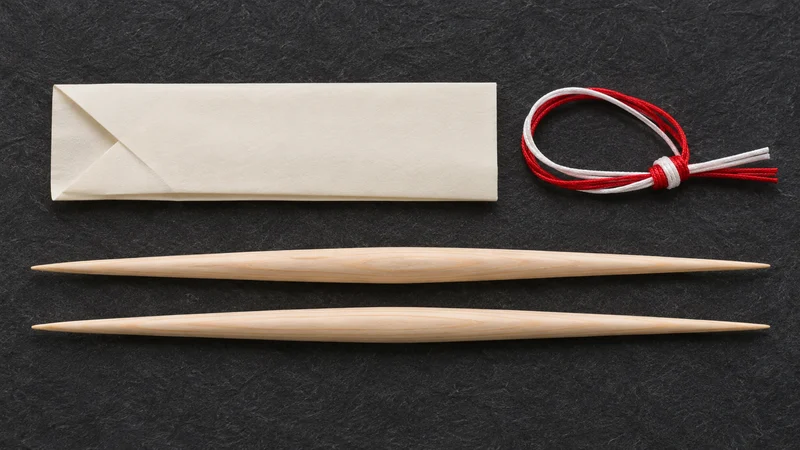
The cultural meaning belongs to the meal
Web Japan's niponica feature on celebratory tableware connects the two tapered ends with people and deities sharing a meal, and places the chopsticks in New Year and wedding settings. It identifies willow and describes the protective association as a belief. That account supports explaining a symbolic custom, not promising that the utensil will protect someone from harm.
Japan House's chopsticks essay discusses the same double-ended form through the idea of gods and people dining together. It also distinguishes special celebratory pairs from ordinary everyday disposable chopsticks. The occasion, handling, and explanation matter alongside the silhouette.
Kikkoman additionally describes their use in okuizome, a ceremonial first-meal occasion in which feeding is pretended. That is cultural context, not advice to put adult chopsticks or solid food into an infant's mouth. A visitor should follow the family's arrangements and the child's caregivers rather than treating a short online description as instructions for a baby-feeding ceremony.
These sources offer related explanations, not a census of every Japanese household. A family may observe a custom closely, adapt it, or use celebratory tableware mainly for its festive appearance. Ask a host what the setting means before assigning a religious intention to everyone at the table.
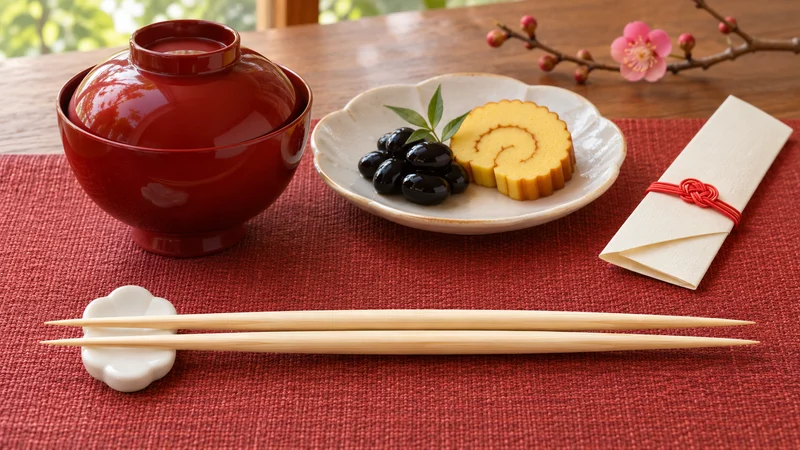
At the table, keep eating and serving separate
For a guest, the simplest useful question is "Which pair is mine, and which utensils are for the shared dishes?" A double-ended personal pair should not be treated as two separate utensils merely because both tips are narrow. If serving utensils have not been provided, ask the host rather than reversing the personal pair on your own initiative.
Put a used pair back in its own place. When a rest is supplied, use it so the eating tips have a predictable return position instead of balancing them against a shared dish. The chopstick rest guide discusses stability and placement; it is not a guide to religious observance.
For example, a host might set one wrapped pair at each seat and a separate serving pair beside a shared platter. The paper sleeves can help guests identify their own settings. They do not tell a guest whether a pair is reusable, which cleaning method it tolerates, or how long the household plans to keep it.
If the pair feels unfamiliar, practice opening and closing it over your own plate before reaching toward food. Do not force the tips through a hard piece or chew a rough edge. A damaged or splintered utensil should be replaced rather than retained because it looks ceremonial. These are practical handling precautions, separate from the meaning of the two ends.
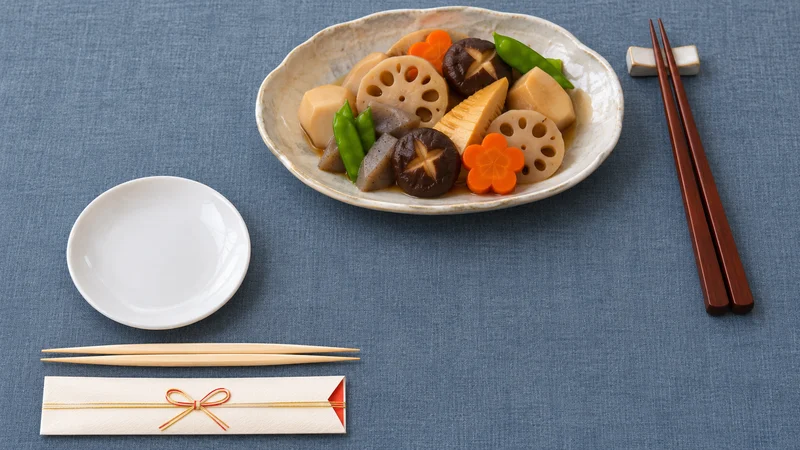
Choose a usable pair without inventing a care ritual
The material and care label should answer the everyday questions: is this sold for eating, what is it made from, and is it intended for one use or repeated use? Ask the seller when that information is missing. Do not infer dishwasher permission from the word willow, or a mandatory reuse period from the word iwaibashi.
The site's Japanese wooden chopsticks guide explains why material, finish, intended purpose, and maker directions need to be considered separately. A plain celebratory pair and a lacquered everyday pair need not share one maintenance routine. Keep the packaging information if you expect to use the pair again.
Hosts can make a setting easier to understand by separating guest pairs from communal utensils before the meal begins. Provide an ordinary alternative for a guest who cannot comfortably use the supplied pair. Participation in a celebration need not depend on handling an unfamiliar utensil perfectly.
The illustrations here show unbranded modern examples of a shape and table arrangement. They are not photographs of verified willow products, historical artifacts, or an actual family's ceremony. Use the sources for the cultural explanation and the product's own information for its material and care.
Guest questions about iwaibashi
Are iwaibashi the same as ordinary disposable chopsticks?
Not simply. Iwaibashi names a celebratory use, and the double-ended form discussed here differs from a familiar joined disposable pair. Do not use the word alone to decide whether a particular product is single-use or reusable; check its directions.
May I reverse them to take food from a shared dish?
Do not assume that both narrow ends are interchangeable serving ends. Ask for the designated serving utensil. The cultural explanation of an end for the deity is not a communal-serving instruction.
Must every pair sold as iwaibashi be willow?
The cited cultural accounts describe willow, but the name on an unidentified listing does not prove its species. Read the specific material declaration and ask the maker or seller if it is absent.
Do I need to observe a religious practice to use celebratory chopsticks?
The sources explain a religious symbolism, but individual families and occasions differ. Follow the host's explanation and distinguish that setting's practice from a claim about everyone in Japan.
Can a paper sleeve tell me how to wash the pair?
Only if it includes actual care information. A decorative sleeve alone does not establish dishwasher suitability, permitted soaking, or reuse. Follow the product's directions instead of copying a ritual or cleaning rule from an unrelated pair.
Cultural sources
- Kikkoman: Chopsticks / Ohashi, the section on occasions related to chopsticks, for festive use, the described form, and okuizome context.
- Web Japan, niponica 39: Preparing Spaces for Seasonal Celebrations, "Celebratory Chopsticks," for the willow and shared-meal symbolism.
- Japan House: Chopsticks, the gods-and-people-dining-together section, for the double-ended celebratory form.
Sources checked November 16, 2026. For a real invitation, the host's own arrangements remain more useful than assuming every celebration follows one script.