 Chopsticks Guide
Snow Peak Titanium Chopsticks: SCT-115 Facts and Care
Snow Peak's titanium chopsticks are the SCT-115 series, not simply any metal-looking pair sold under the brand. Before choosing them for a lunch bag, check the exact model, the size and what the instructions say about the case as well as the utensils.
Quick Answer: Snow Peak titanium chopsticks in the SCT-115 series are titanium-alloy utensils listed at 200 mm long and 22 g for the chopsticks. The official manual lists a polyester carrying case, requires hand washing and warns against a dishwasher or dish dryer. This is a source-based guide, not a hands-on test or an endorsement of a particular seller.
SCT-115 specifications with their scope kept intact
- Chopstick material
- Titanium alloy, not a claim of commercially pure titanium.
- Published dimensions
- 200 x 5 x 12 mm in the official series manual.
- Published utensil weight
- 22 g for the chopsticks; do not relabel it as the weighed total of a packed kit.
- Carrying-case material
- Polyester in the cited manual.
- Cleaning restriction
- No dishwasher or dish dryer; hand wash as directed.
- Evidence used
- Manufacturer manual, version 1.00; checked November 4, 2026.
Specifications describe the documented SCT-115 series. Check the manual supplied with the exact version you are buying. The unbranded illustrations are not verified Snow Peak product samples.
Start with SCT-115, not a material nickname
The official SCT-115 manual names titanium alloy for the chopsticks and polyester for the case. That is a more precise description than 'all titanium': the utensil and its carrier are different components with different instructions.
Read the model on the listing and supplied paperwork together. Do not transfer the construction or storage method of another Snow Peak pair to SCT-115 merely because both are portable chopsticks. A product-family photograph or a search result is not enough to establish the material of a particular item.
The manual also discusses oxidation coloring and possible wear to the color. A surface color is therefore not a reliable way to identify the metal or authenticate a seller's item. Ask for the exact model and its documentation instead of treating a silver or blue appearance as proof. This guide has not tested a retail sample or verified an individual seller.
What the 200 mm length and 22 g figure actually describe
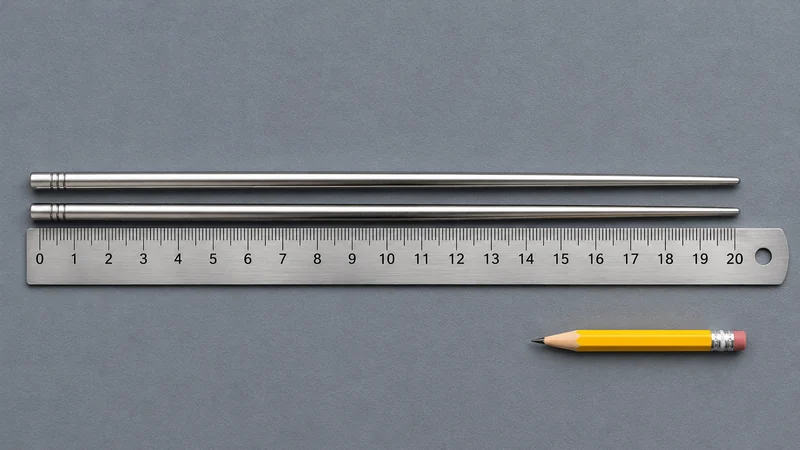
The series manual gives dimensions of 200 x 5 x 12 mm and a chopstick weight of 22 g. Its English specification explicitly labels the weight as the chopsticks. Do not add a case, packaging or other tableware in a photograph and still call the entire bundle a measured 22 g set.
For a practical comparison, put a pair you already use comfortably beside a ruler and note its length. Compare that with 200 mm, or 20 cm. This does not require assuming that a shorter or lighter pair is automatically easier to use. Grip shape, tip control and your own hand position are separate questions that a specification table cannot settle.
A lunch bag presents another comparison: the length of the utensils is not the usable inside dimension of every pouch. If you plan to use a different carrier, check that the tips are protected and that it closes without forcing the pair. The chopstick-case guide explains the distinction between outside measurements, usable space and a realistic cleaning routine.
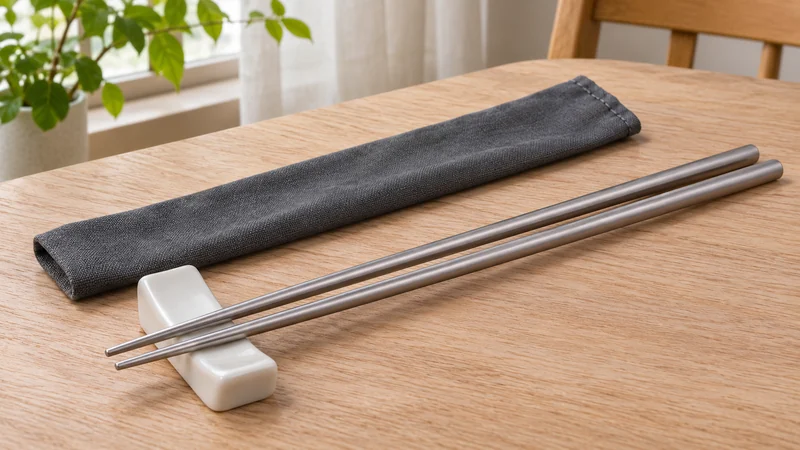
Carry the tips covered and keep the case away from heat
The manual's carrying directions say to expose the back ends by moving the top of the supplied case to the side, then withdraw the chopsticks. Reverse that procedure for storage. Follow the supplied case's actual design; a generic zipped pouch in an illustration is not an instruction for opening this particular carrier.
The same manual warns against carrying exposed tips and against putting the product in a clothing pocket. A narrow lunch-bag compartment and a trouser pocket are not interchangeable just because both can hold a long object. For transport, use the intended case and keep the pair from pressing through loose fabric.
At camp, keep the case away from bonfires, fuel-burning lanterns, stoves and heaters. The instructions also warn that the metal utensils can cause burns and that flame exposure can change their color. A titanium-alloy label is not permission to leave the pair in hot cookware or turn it into a cooking tool. Check the utensil's intended use rather than borrowing a claim from a titanium pot.
Wash the chopsticks and the case as different objects
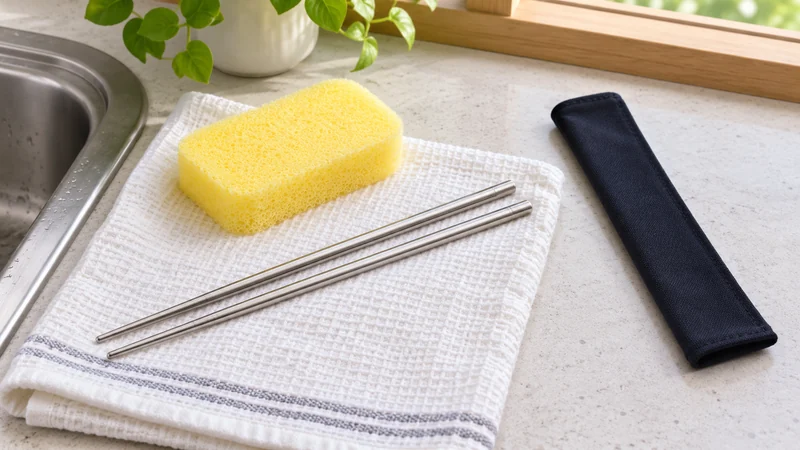
For the utensils, the manual's maintenance section specifies hand washing with a soft sponge and neutral detergent, then drying well with a cloth. It warns against abrasive sponge surfaces and explicitly prohibits a dishwasher and dish dryer. Those model-specific restrictions take precedence over a general assumption that metal tableware is dishwasher-safe.
The case has a different procedure: dab dirt with a cloth moistened with warm water and diluted laundry detergent. The manual says not to machine-wash, tumble-dry or fully submerge it, and directs shade drying in a ventilated place. Do not read 'hand wash the chopsticks' as permission to soak every component of the set together.
After a meal, plan for both parts to be cleaned and dried as directed before the next use. The manual warns against leaving the case wet for a long time. If your daily routine cannot accommodate the specified care, that is a useful buying consideration; it does not establish that a different material is universally cleaner.
The inspection a specification sheet cannot do for you
Before use, inspect the parts that contact the mouth. The manufacturer's warning is clear that a damaged contact area is a reason not to use the product. It also cautions against forceful bending. Do not bend a damaged tip back into shape and describe that as an approved repair.
Thin tips call for ordinary handling care: do not walk with the chopsticks in your mouth or point them at another person. If children use this product, follow the manual's supervision warning. These are the maker's instructions for this series, not evidence that the product has been assessed as a training utensil for every age.
For the purchase decision, the useful questions are concrete: is the model identified, does the stated length suit your current grip, can you protect the tips in transit, and will you follow both care routines? Check the current seller's terms separately. No price, stock status, comparative durability score or real-world test result is claimed here.
Quick Reference: utensil and case instructions compared
| Item | What the manual says | What not to assume |
|---|---|---|
| SCT-115 chopsticks | Titanium alloy; 200 mm length; 22 g utensil weight | That 22 g is a weighed packed-kit total. |
| Utensil washing | Soft sponge, neutral detergent, hand wash, dry with a cloth | That all metal chopsticks permit a dishwasher. |
| Polyester case | Dab-clean; shade dry with ventilation | That soaking or machine washing is permitted. |
| Transport | Use the supplied carrier; protect the tips | That a clothing pocket is an approved carrier. |
The table summarizes the cited series manual. It is not an independent laboratory or hands-on comparison.
Questions about SCT-115 specifications and everyday use
Are Snow Peak SCT-115 chopsticks pure titanium?
The official manual specifies titanium alloy. It does not describe the utensils as commercially pure titanium; the supplied case is a separate polyester component.
Does the 22 g weight include the carrying case?
The manual labels 22 g as the chopstick weight. Do not present it as a measured total for the case and all other packed items.
Can SCT-115 chopsticks go in the dishwasher?
No. The cited manual prohibits a dishwasher and dish dryer and directs hand washing with a soft sponge and neutral detergent.
Can I wash the fabric case in a washing machine?
No. The cited case instructions say to dab-clean it with a moistened cloth, not machine-wash or fully submerge it, and to dry it in the shade with ventilation.
Has this guide tested a retail pair?
No. It is a model-specific reference based on the manufacturer's manual. The illustrations are unbranded teaching scenes, not verified Snow Peak samples or test evidence.
Manufacturer documents used for this reference
- Snow Peak: SCT-115 series manual linked from the current product page
- Snow Peak: SCT-115 manual, English safety, maintenance and carrying directions
Read on November 4, 2026. The linked color-version documents carry the SCT-115 series instructions. Follow the document supplied with your own version if it differs. This is not a sponsored review, an authenticity certificate or a hands-on product test.