 Chopsticks Guide
How Do Koreans Hold Chopsticks? Grip, Metal Tips, and the Spoon
Quick Answer: A practical way to hold Korean chopsticks is to steady the lower stick and move the upper one with the fingers, keeping the eating tips aligned. The grip is not unique to Korea, and individual habits vary. What often changes the experience is the utensil: a slim metal pair can feel different from rounded wooden chopsticks, and a Korean place setting commonly includes a spoon as well.
First separate the grip from the table custom
There is no single hand position that describes every Korean diner. Learning the grip and understanding the meal are related but separate tasks. One concerns controlling two sticks; the other concerns which utensil suits the food and how the host arranges the table.
The Korea Tourism Organization's introduction to Korean food describes a meal with rice, soup, spoons, chopsticks, and several side dishes. That helps explain why you do not need to lift every food with the chopsticks. The spoon has a real job at the same table.
Korea.net's table-manners introduction describes a conventional setting with rice on the left, soup on the right, and the spoon to the left of the chopsticks. It also acknowledges casual household practices. Use that as a starting convention, then follow the setting and guidance at the actual meal.
Quick Facts
- Grip method
- Steady lower stick, moving upper stick
- Practice tools
- Aligned chopsticks and an empty plate
- Material variation
- Flat and rounded metal pairs differ
- Meal utensils
- Spoon and chopsticks have separate uses
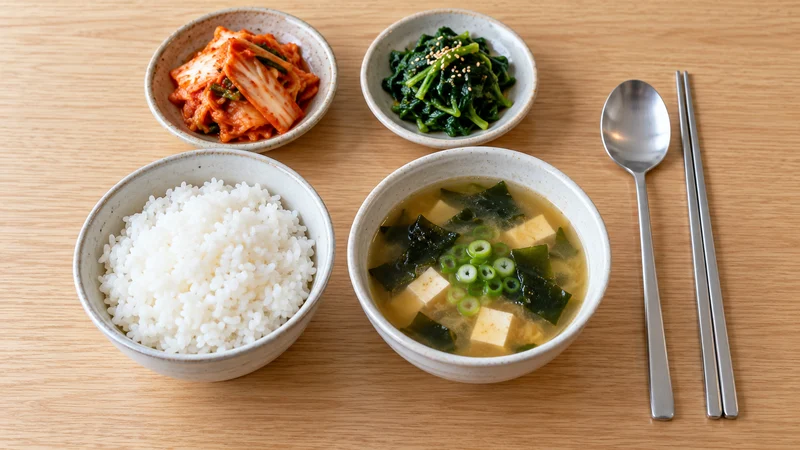
Set up one steady stick and one moving stick
Start away from hot food. Hold the pair above an empty plate and align the tips before trying to pick anything up. These are practice instructions for controlling the utensils, not a claim that every diner uses the same finger placement.
- Support the lower chopstick near the base of the thumb and against the ring finger. Let it remain still rather than clenching it into the palm.
- Hold the upper stick with the thumb, index finger, and middle finger, somewhat like a pencil. Keep enough space for the upper stick to move.
- Open and close the upper stick while watching the tips. The ends should meet without crossing. Move slowly enough to notice whether the lower stick has started to wander.
- If the sticks cross, pause and reset their height. Rotating the whole wrist or squeezing harder usually hides the alignment problem instead of solving it.
- Try lifting a large, dry practice item from one plate to another. Keep the distance short. Progress to food once the motion feels controlled.
The useful test is not whether your hand resembles a photograph. It is whether the lower stick remains steady and the tips meet predictably without pain. If a finger cramps, release the grip, rest, and try a lighter hold. You can ask for a different utensil rather than struggle through a meal.
Why a flat metal pair can feel unfamiliar
Do not assume all metal chopsticks have identical weight or shape. Some pairs are flat, others more rounded; surface texture and balance vary. A slim, smooth pair may rotate in the fingers if you press only on an edge. Start by noticing the broad faces and how the tips sit when the pair closes.
Try two small adjustments before abandoning the pair. First, move your grip a little along the handle until the balance feels manageable. Second, reduce the opening between the tips and attempt a wider piece of food. A large opening and a slippery item make it harder to see which part of the movement is causing the problem.
These are practice options, not measured performance claims. A different material may feel easier, but no material guarantees correct technique. The site's metal chopsticks guide offers material context; its chopstick length guide covers another factor worth considering when a pair feels awkward.
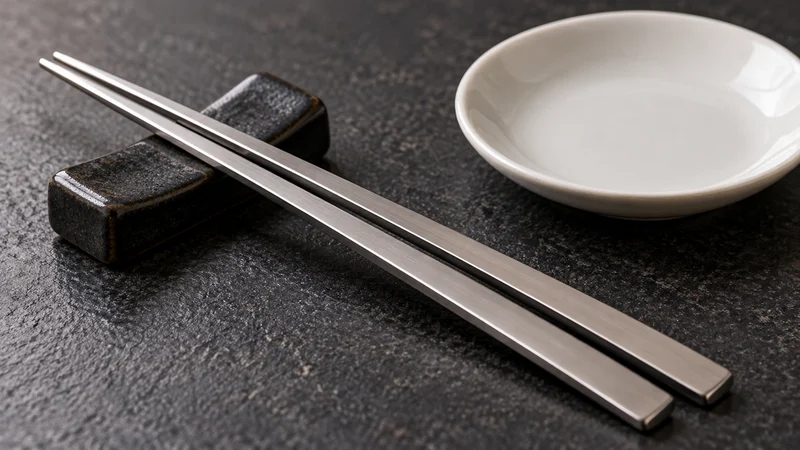
Put down one utensil before picking up the other
At a meal, let the food guide the switch. The spoon is useful for soup and rice; chopsticks can handle suitable pieces of side dishes. You do not need to demonstrate skill by chasing individual grains with smooth metal tips.
Korea.net's table-manners article advises leaving the rice and soup bowls on the table rather than lifting them toward the mouth, and avoiding chopsticks planted upright in rice. Those are dining conventions described by that source. They are not a reason to judge someone who needs an adaptation or has been offered another utensil.
When switching, put one utensil down securely before taking up the other. Leave the eating ends on the provided rest or another clean, appropriate surface. If the arrangement is unclear, ask the host rather than improvising with shared food. A chopstick rest is a support for the utensil, not a test of dexterity.
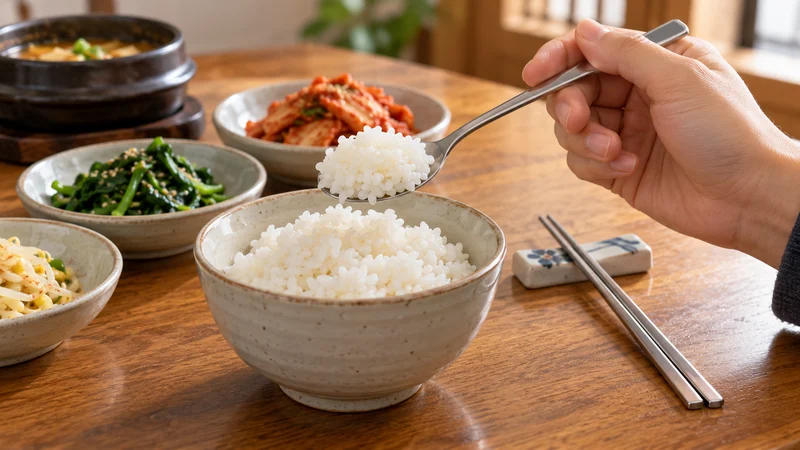
A short practice check before the meal
Quick Reference
| What you notice | What to try |
|---|---|
| Tips cross before touching | Realign the lower stick and narrow the opening |
| Both sticks move together | Release the grip and re-establish the lower support |
| Flat handles rotate | Notice the broad faces and use a lighter, steadier hold |
| Food slips repeatedly | Try a larger, less slippery piece or use the spoon |
| Fingers hurt | Stop, rest, and choose a comfortable utensil |
Practice the opening and closing motion first, then one short transfer. That is enough to identify the next adjustment. A shared meal does not need to become a prolonged lesson, especially when food is cooling or someone is uncomfortable.
Questions about using Korean chopsticks
Is there a separate Korean-only finger grip?
There is no single grip used by everyone. The steady lower stick and moving upper stick are a practical learning method; the metal shape and spoon-and-chopsticks setting may be the unfamiliar parts.
Must I use metal chopsticks at every Korean meal?
Use the utensils provided or ask for a comfortable alternative. Material alone does not determine respectful behavior or whether you can enjoy the food.
Should I use chopsticks for every grain of rice?
No. A Korean setting commonly includes a spoon, and using it is an ordinary option. There is no need to turn the rice into a grip exercise.
What should I do if the metal pair keeps slipping?
Reset the tip alignment, reduce the opening, and try a larger piece. Stop if your hand hurts; ask for another utensil rather than squeezing harder.